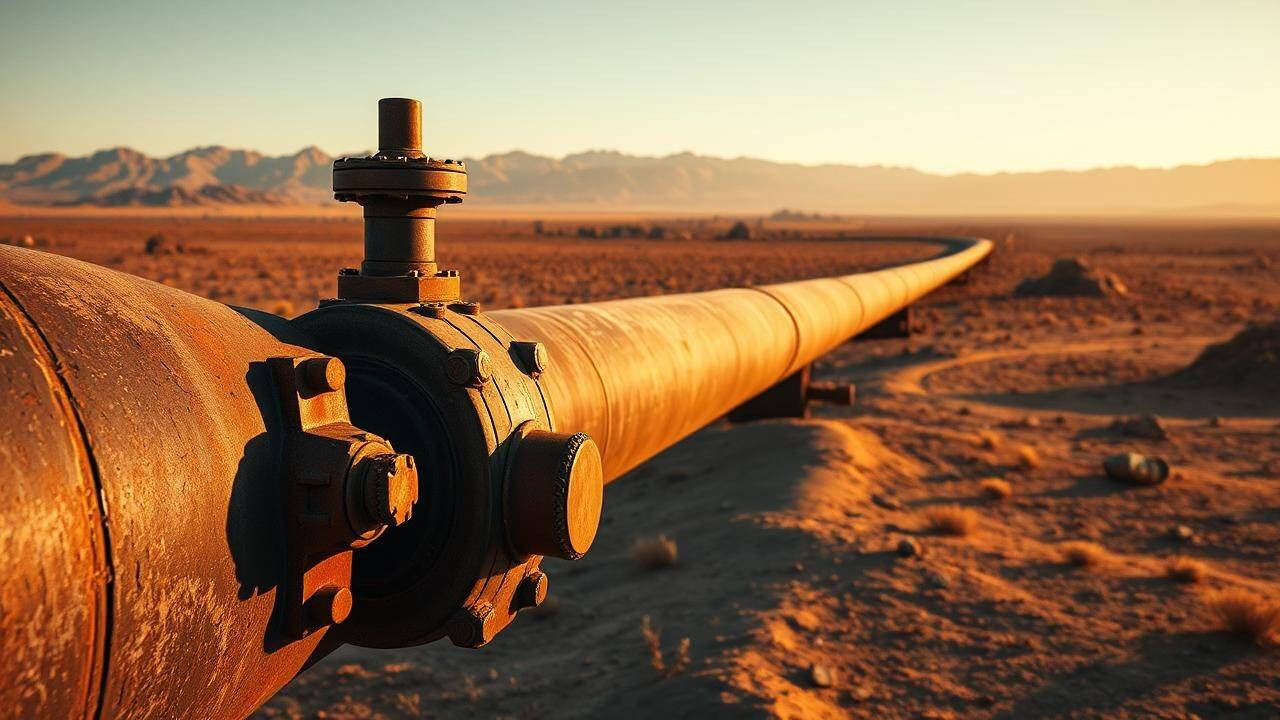
Iraq has restarted oil exports from its Kurdistan region, ending a two-year suspension due to legal disputes and pipeline closures. Following agreements between Baghdad and Arbil, SOMO will now manage crude flows through the Iraq-Turkey pipeline. This crucial step, welcomed by the US, aims to recover significant lost revenue.
Black Gold Flowing Again: Kurdistan Oil Exports Resume After Costly Halt
For two long years, a vital artery in the global energy network has been blocked. Now, finally, oil is once again flowing from Kurdistan through Iraq’s pipeline to the Turkish port of Ceyhan. This resumption of Kurdistan oil exports marks the end of a protracted and expensive standoff that cost the region dearly, and it offers a glimmer of hope for economic recovery. But the road ahead is paved with complexities.
The shutdown, which began in March 2023, followed a ruling by the International Chamber of Commerce (ICC) that sided with Iraq in a dispute with Turkey over independent oil exports by the Kurdistan Regional Government (KRG). Baghdad argued that all oil exports should be managed through the central government, a position the ICC ultimately upheld. The ramifications were immediate and severe. The KRG, heavily reliant on oil revenues, faced a financial crisis, impacting public sector salaries and essential services. The loss of revenue is estimated to be over $13 billion.
It’s not just about the money, though. The interruption disrupted energy markets and raised concerns about the stability of supply. For Kurdistan, it meant a near standstill in its primary economic activity. Imagine a community where the main employer suddenly closes its doors – that’s the scale of the impact.
Now, with an agreement tentatively in place, oil is being pumped again. The initial volumes are modest, but the restart is a critical first step. What’s changed? Well, a degree of compromise, driven by economic necessity and a recognition that continued deadlock benefits no one.

What Sparked the Shutdown of Kurdistan Oil Exports?
The root of the issue lay in the KRG’s independent oil policy, which Baghdad viewed as a violation of its constitutional authority. The KRG, however, argued that it had the right to manage its own resources. The disagreement escalated into a legal battle, culminating in the ICC ruling that favored Iraq. The core of the problem was a disagreement on how revenue was distributed.
The bigger picture is one of long-standing tensions between Baghdad and Erbil (the capital of Iraqi Kurdistan) over political and economic autonomy. Oil has always been a central point of contention, representing both a source of wealth and a symbol of power.
The Economic Impact of Halting Kurdistan Oil Exports

The financial consequences of the pipeline closure have been devastating for the Kurdistan region. With oil exports accounting for a significant portion of its income, the KRG struggled to meet its financial obligations. The drop in revenue has rippled through the economy, affecting businesses, employment, and public services. The Iraqi central government also felt the impact, although to a lesser extent. A stable and prosperous Kurdistan is good for Iraq as a whole, and the disruption hurt overall economic performance.
The halt also had implications for international energy markets. While the volumes of Kurdistan oil exports might seem small on a global scale, any disruption to supply can create volatility and uncertainty.

Looking Ahead: Challenges and Opportunities for Kurdistan Oil
The resumption of exports is undoubtedly good news, but significant challenges remain. The agreement between Baghdad and Erbil is still evolving, and long-term stability depends on addressing several key issues. The precise details of revenue sharing, contract management, and future investment need to be ironed out.
For example, the contracts that international oil companies have with the KRG were put into question. Reassuring these companies that their investments are secure is crucial for attracting future capital and increasing production. This links to the broader stability of the region and will bring investors who support development.
Moreover, the KRG needs to diversify its economy to reduce its reliance on oil. Investing in other sectors, such as agriculture, tourism, and technology, can create new opportunities and make the region more resilient to future shocks. This would also help avoid these issues in the future. Check out [our article on economic diversification in developing regions](internal-link).
The resumption of oil exports offers a chance for a fresh start, a chance to rebuild trust and forge a more sustainable economic future. However, realizing that potential will require cooperation, compromise, and a commitment to addressing the underlying issues that led to the shutdown in the first place. It’s a delicate balance, but with political will and sound economic management, Kurdistan can once again become a reliable and prosperous contributor to the global energy market. This can be a positive change for the region, if handled correctly.