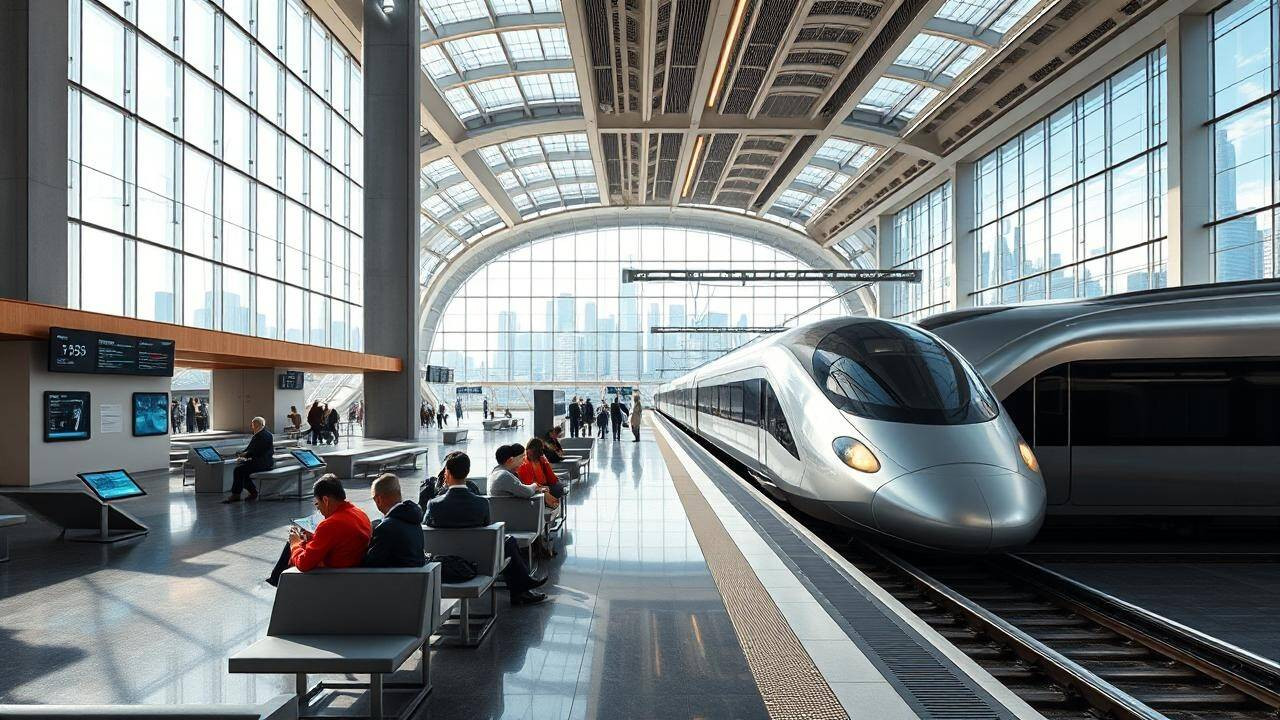
Union Railway Minister Ashwini Vaishnaw announced India’s first bullet train, the Surat to Bilimora stretch, will be operational by 2027, highlighting significant progress on tracks and stations. New technologies are being implemented, and the Surat station features passenger comfort, connectivity, and sustainability. The Mumbai-Ahmedabad corridor is also advancing steadily with substantial infrastructure work completed.
Riding the Rails into Tomorrow: India’s Bullet Train Dream Takes Shape
For years, it’s been the stuff of ambitious headlines and futuristic visions: a high-speed rail network connecting India’s major cities, shrinking distances and propelling the nation into a new era of transportation. Now, that vision is rapidly materializing. The first section of India’s ambitious bullet train project, connecting Surat and Bilimora in Gujarat, is slated for completion by 2027. Imagine gliding between these two bustling hubs in a fraction of the time it currently takes. That future is closer than you think.
This isn’t just about speed; it’s about a transformation. The Mumbai-Ahmedabad High-Speed Rail (MAHSR) project, as it’s officially known, is poised to redefine travel, boost economic activity, and showcase India’s engineering prowess. While the entire project, linking Mumbai and Ahmedabad, faces various challenges and is expected to be fully operational later, the Surat-Bilimora section marks a significant milestone – a tangible demonstration that the Indian bullet train dream is becoming reality.
Surat-Bilimora: A Sneak Peek into the Future of Rail Travel
Why is the Surat-Bilimora section so crucial? It serves as a testing ground, a showcase, and a proof of concept. It allows engineers and operators to fine-tune the technology, train personnel, and iron out any remaining kinks before expanding the high-speed network. Think of it as the initial brushstroke on a grand canvas.

The construction itself is a marvel. The route includes impressive bridges, viaducts, and dedicated high-speed tracks, all designed to handle the immense forces and speeds involved. The infrastructure has been built to world class standards. This stretch isn’t just about laying tracks; it’s about building an entirely new ecosystem for high-speed rail.

What Makes This Bullet Train So Special?
The planned Shinkansen E5 series trains, based on Japanese technology, are designed for speeds of up to 320 km/h, drastically cutting travel time. They are renowned for their safety, reliability, and passenger comfort. The trains are engineered to provide a smooth, quiet ride, even at top speed, ensuring a pleasurable journey for passengers.
Beyond the trains themselves, the entire system is designed for efficiency and safety. Advanced signaling systems, automated train control, and rigorous safety protocols are all integral parts of the design. The goal is not just to move people quickly, but to move them safely and reliably.
The Wider Impact: More Than Just Speed
The impact of the bullet train extends far beyond simply reducing travel time between Mumbai and Ahmedabad. It is expected to:
* Boost Economic Activity: Faster connectivity facilitates trade, investment, and tourism, stimulating economic growth along the corridor. Businesses will be able to operate more efficiently, and new opportunities will emerge.
* Create Jobs: The construction and operation of the high-speed rail network will generate thousands of jobs, both directly and indirectly, from construction workers to engineers to hospitality staff.
* Improve Connectivity: It will link key industrial and commercial centers, fostering greater integration and collaboration.

* Reduce Congestion: By providing a viable alternative to road and air travel, it can help alleviate congestion on existing infrastructure.
Challenges and the Road Ahead
Of course, a project of this scale is not without its challenges. Land acquisition, environmental concerns, and the sheer complexity of the engineering involved all present significant hurdles. The project has faced delays, and cost overruns are always a possibility. However, the commitment from both the Indian and Japanese governments remains strong, and progress is being made steadily.
The completion of the Surat-Bilimora section is a testament to the perseverance and dedication of the teams involved. It provides a crucial learning experience and helps build confidence for the remaining phases of the project.
The Future is Fast
The imminent launch of the Surat-Bilimora section signals something truly exciting: that India is charging full steam ahead towards a future where distances shrink, opportunities expand, and travel is faster, smoother, and more efficient than ever before. The Indian bullet train project isn’t just about building a railway; it’s about building a new India, one high-speed track at a time. This initial launch will be a critical step towards developing a more comprehensive high-speed rail network across the country. Want to learn about potential future routes and connections? Check out our article on [future Indian rail projects](internal-link-placeholder).
The journey is just beginning, but the destination – a more connected, prosperous, and dynamic India – is firmly within sight.