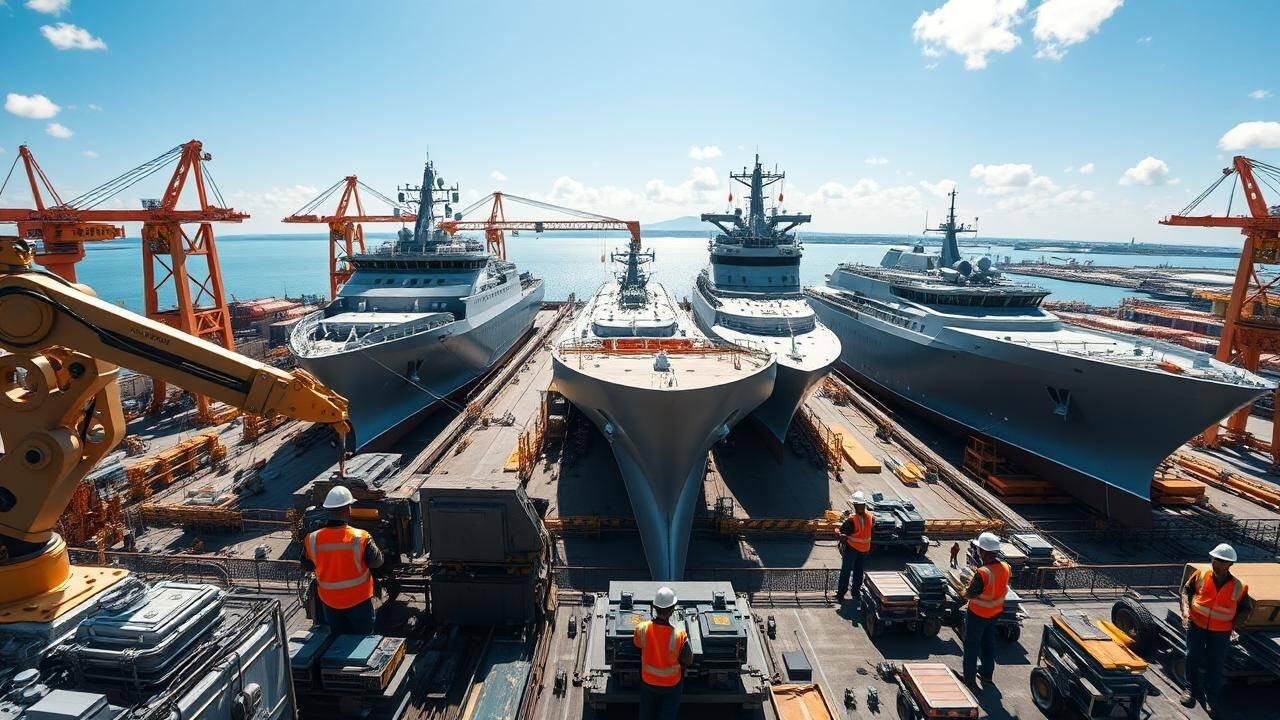
India launched a Rs 70,000-crore package to revolutionize its shipbuilding sector, aiming for a “Maruti moment.” This initiative seeks to reduce reliance on foreign vessels, which handle 95% of trade, by boosting domestic capacity and attracting major Korean and Japanese shipbuilders. The plan includes incentives and a development fund to strengthen India’s maritime security and economic resilience.
Charting a New Course: India’s Ambitious Push for Shipbuilding Dominance
For decades, India’s maritime ambitions have largely relied on foreign shipyards. Think of the vessels crisscrossing our coastlines, the naval power protecting our waters, and the merchant ships facilitating trade – a significant portion has been built beyond our shores. But the winds are shifting. Imagine a future where ‘Made in India’ is proudly emblazoned on the hulls of world-class ships, a future where our own shipyards are bustling hubs of innovation and employment. This isn’t just a dream; it’s a strategic objective, and the Indian government is putting serious money behind it.
A bold move is underway. A massive ₹70,000 crore (approximately $8.4 billion USD) package aims to revitalize the domestic shipbuilding industry. This isn’t just about building ships; it’s about building self-reliance, bolstering our economy, and securing our strategic interests. This initiative has the potential to be a ‘Maruti moment’ for the shipbuilding sector – a reference to how Maruti Suzuki revolutionized the Indian automobile industry decades ago. Can shipbuilding follow a similar trajectory?
What’s Driving This Shipbuilding Surge?
The reasons behind this ambitious push are multifaceted. Firstly, national security looms large. A strong domestic shipbuilding industry is crucial for maintaining a robust naval fleet and coast guard, reducing dependence on foreign suppliers during critical times. Secondly, economic considerations are paramount. Shipbuilding is a labor-intensive industry, capable of generating significant employment opportunities across various skill levels, from welders and engineers to designers and project managers. Moreover, a thriving shipbuilding sector can boost related industries, such as steel manufacturing, equipment suppliers, and marine technology providers.

Thirdly, there’s the ambition to become a major player in the global maritime arena. India has a long and rich maritime history. This initiative aims to reclaim that legacy and establish India as a competitive force in the international shipbuilding market. Imagine Indian shipyards not just catering to domestic needs, but also exporting high-quality vessels to countries around the world.

Decoding the ₹70,000 Crore Package
So, where will this significant investment go? The package is designed to address various challenges facing the Indian shipbuilding industry. It includes measures to:
* Provide financial incentives: Subsidies and tax breaks will be offered to shipyards to make them more competitive in bidding for contracts, both domestic and international.
* Modernize infrastructure: Upgrading existing shipyards with state-of-the-art equipment and technologies is essential for improving efficiency and productivity.
* Promote indigenous manufacturing: The package encourages the use of domestically produced materials and components in shipbuilding, reducing reliance on imports and boosting local industries.
* Develop skilled workforce: Investing in training programs to equip workers with the necessary skills to meet the demands of the modern shipbuilding industry is crucial.
* Streamline regulatory processes: Simplifying bureaucratic procedures and reducing red tape will make it easier for shipyards to operate and compete.
* Focus on green shipbuilding: The initiative also prioritizes the development of environmentally friendly shipbuilding technologies and practices. This is increasingly important as the global shipping industry faces growing pressure to reduce its carbon footprint. Learn more about India’s commitment to sustainable development initiatives.

Navigating the Challenges Ahead
While the potential benefits of this shipbuilding initiative are immense, several challenges need to be addressed. Indian shipyards currently face stiff competition from countries like China, South Korea, and Japan, which have well-established and highly efficient shipbuilding industries. Overcoming this competition will require significant improvements in productivity, technology adoption, and cost competitiveness.
Another key challenge is attracting and retaining skilled labor. The shipbuilding industry requires a diverse range of skills, and India needs to invest in training programs to ensure that it has a sufficient pool of qualified workers. Furthermore, developing a robust supply chain for domestically produced materials and components is essential for reducing reliance on imports and supporting the growth of local industries.
Full Steam Ahead for Indian Shipbuilding?
India’s ambitious plan to boost domestic shipbuilding represents a significant strategic shift. The ₹70,000 crore package has the potential to transform the industry, creating jobs, boosting the economy, and enhancing national security. While challenges remain, the government’s commitment to this sector signals a clear intention to chart a new course for India’s maritime future. The success of this initiative hinges on effective implementation, collaboration between government and industry, and a relentless focus on innovation and competitiveness. Only time will tell if this truly becomes a “Maruti moment”, but the ambition is certainly there, and the journey has begun.