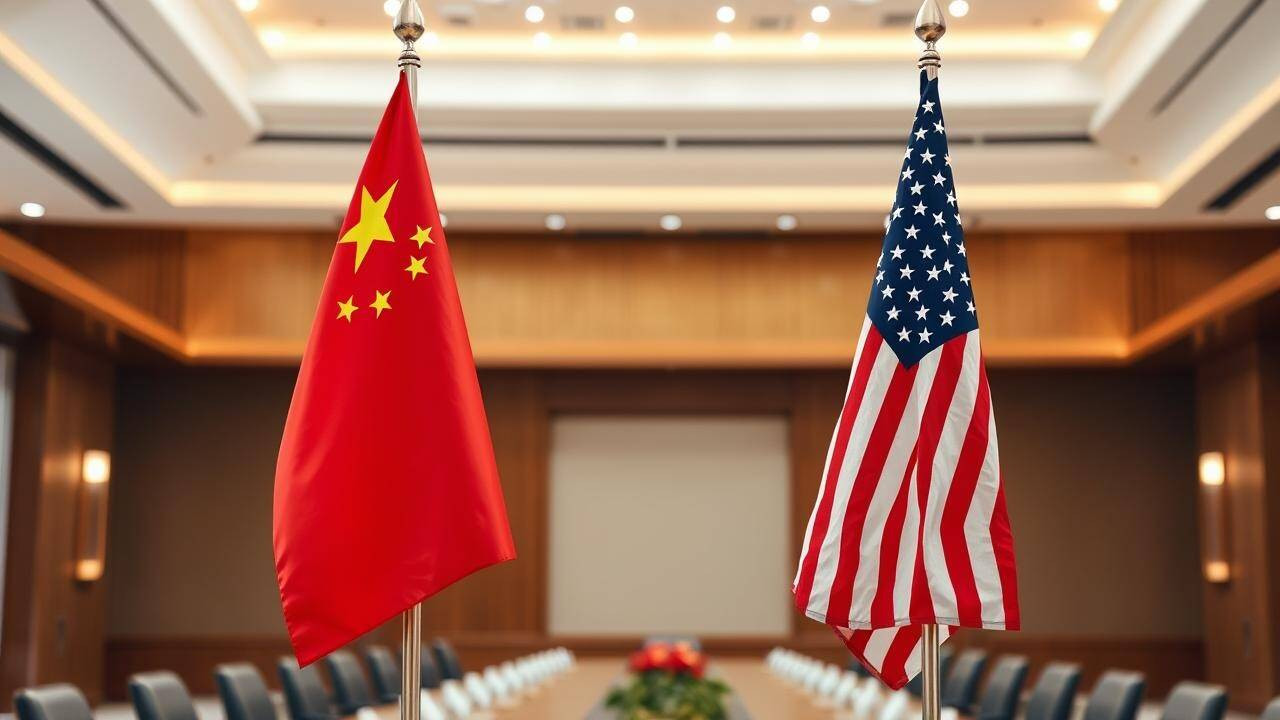
China strongly protested the US’s expanded export restrictions, which now automatically include subsidiaries 50% or more owned by blacklisted companies. This move significantly increases firms needing licenses for American goods and technology, complicating supply chains. Beijing demanded Washington immediately correct its “wrongful action” against Chinese enterprises.
Tech Tensions Rise: Is the US Export Blacklist Targeting Legitimate Protests in China?
The air is thick with technological and political friction as the US government finds itself under increasing scrutiny for its recent expansion of the export blacklist. The move, ostensibly designed to prevent sensitive technology from falling into the wrong hands, is now being accused of stifling dissent and unreasonably suppressing protests within China. Are we witnessing a legitimate national security measure, or a chilling overreach that silences voices advocating for change?
The core of the controversy revolves around the inclusion of several Chinese entities on the Entity List, a trade blacklist that restricts their access to US technology and products. While the official justification centers on national security concerns and alleged human rights abuses, critics argue that the timing and breadth of the sanctions suggest a different agenda: clamping down on the burgeoning protest movement within China.
What’s fueling this suspicion? It boils down to the nature of some of the listed entities. Certain companies specialize in surveillance technology, and their inclusion on the blacklist is framed as preventing them from aiding in the suppression of Uyghurs and other minority groups. This aligns with previous US sanctions targeting entities involved in human rights violations. However, some observers see this as a convenient pretext. They contend that the blacklist is being weaponized to target companies whose technology is being used to monitor and control protestors, even if indirectly.
This brings us to a crucial question: how can the US government ensure that export controls don’t become tools of political suppression? It’s a delicate balancing act. On one hand, the US has a legitimate interest in preventing its technology from being used to enable human rights abuses. On the other hand, overly broad or poorly targeted sanctions could have the unintended consequence of stifling legitimate dissent and hindering the flow of information.

The timing of this escalation is undeniably sensitive. Recent months have seen waves of protests across China, fueled by frustrations with stringent COVID-19 lockdowns and growing economic uncertainty. These protests, while largely peaceful, represent a rare display of public dissent in a tightly controlled society. The US, with its long-standing commitment to promoting democracy and human rights, has often expressed support for those advocating for greater freedoms around the world. But does that support extend to actively hindering the Chinese government’s ability to manage internal unrest, even if that unrest is fueled by legitimate grievances?

One of the key concerns being voiced is the lack of transparency surrounding the decision-making process for adding entities to the blacklist. While national security considerations often necessitate a degree of secrecy, critics argue that greater transparency is needed to ensure accountability and prevent political considerations from unduly influencing these decisions. The US government needs to demonstrate a clear and consistent rationale for its actions, one that is grounded in evidence and not simply driven by geopolitical considerations.
The debate also highlights the complex relationship between technology and human rights. Technology can be a powerful tool for both empowerment and oppression. Social media platforms can facilitate the organization of protests and amplify marginalized voices, while surveillance technology can be used to monitor and control dissent. The US government must carefully consider the potential human rights implications of its export control policies, ensuring that they do not inadvertently contribute to the suppression of fundamental freedoms.
Adding fuel to the fire are calls for immediate correction. Demands are intensifying for the US to review the criteria used for blacklisting entities and to provide greater clarity on how these criteria are applied. The current situation risks undermining the credibility of the Entity List and fostering mistrust among businesses and governments alike.

This situation serves as a stark reminder of the interconnectedness of technology, politics, and human rights. The US must navigate this complex landscape with caution, ensuring that its actions are consistent with its values and do not inadvertently undermine the very freedoms it seeks to promote. A failure to do so could have far-reaching consequences, not only for the people of China but also for the future of global trade and international relations. Ultimately, the question boils down to this: can the US strike the right balance between protecting its national security interests and upholding its commitment to human rights and fundamental freedoms around the globe?
The potential chilling effect on global technology trade and the delicate balance between security and freedom of expression require careful consideration. This situation is a call for open dialogue and thoughtful policy-making to ensure responsible use of export controls in a world increasingly shaped by technology.