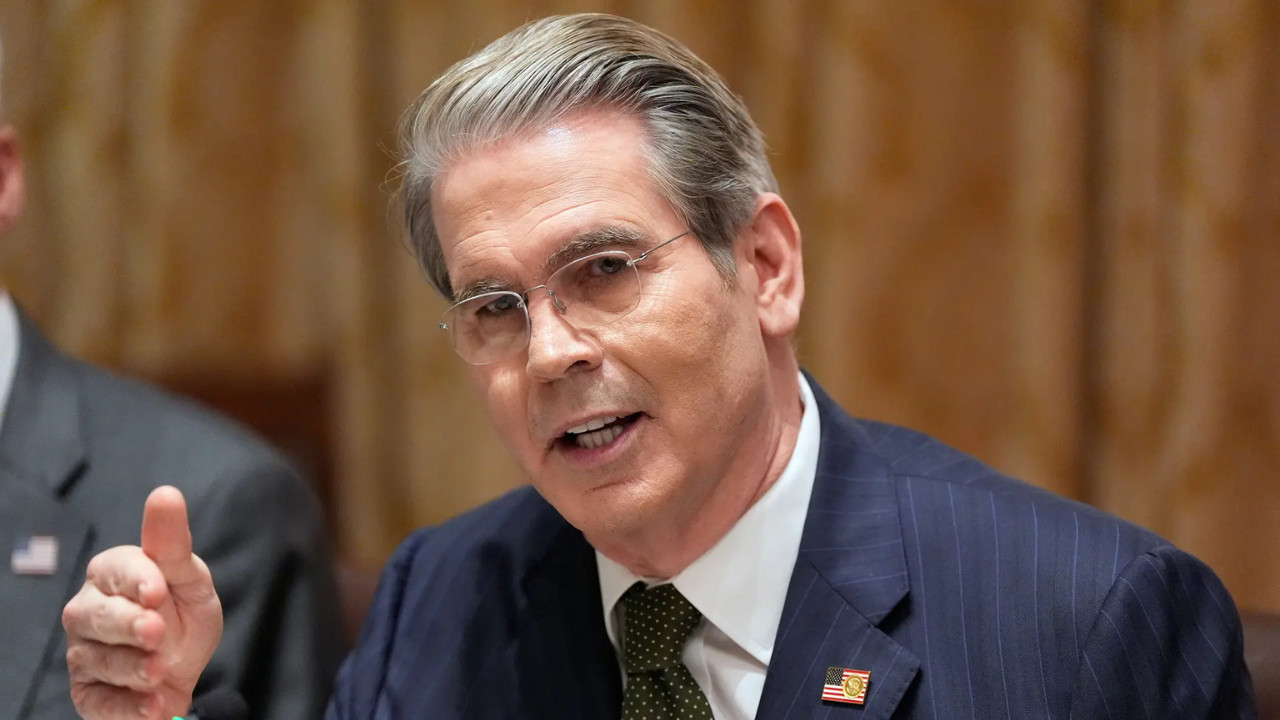
US Treasury Secretary Scott Bessent labelled a senior Chinese trade official ‘unhinged’ and a ‘wolf warrior’ for aggressive behaviour during what he claimed was an uninvited visit to Washington. China’s Commerce Ministry refuted the claims, stating the visit aimed for discussions following presidential talks.
When Diplomacy Gets Spicy: Did China’s Trade Negotiator Crash the Party?
The world of international finance can be pretty buttoned-up, a realm of carefully worded statements and power suits. But every so often, the curtain gets pulled back, revealing a behind-the-scenes drama worthy of a primetime political thriller. Recently, a story bubbled up from Washington that definitely falls into that category, and it involves accusations of some rather unconventional behavior from a top Chinese trade official.
U.S. Treasury Secretary Janet Yellen’s recent assessment of China’s economic policies has been widely publicized. But what hasn’t gotten as much traction is her account of an incident involving a prominent Chinese trade negotiator. Apparently, things got a little…heated.
An Unexpected Guest at the Treasury?
The narrative, as Yellen tells it, involves the aforementioned Chinese trade negotiator showing up, shall we say, uninvited to a meeting at the U.S. Treasury. Picture this: carefully planned discussions, meticulously crafted agendas, and then…bam! An unexpected guest. The specifics of what exactly transpired are, understandably, shrouded in a bit of diplomatic secrecy. However, the implication is clear: this wasn’t a pre-arranged rendezvous.
The reasons behind this alleged surprise appearance remain speculative. Was it a deliberate power play? A miscommunication? Or perhaps a genuine misunderstanding? Whatever the explanation, the incident seems to have left a lasting impression, at least judging by Yellen’s candid retelling.

The Wolf Warrior Persona: A Shifting Landscape in International Relations
Yellen’s choice of words – describing this individual with a colorful, if slightly inflammatory, term – hints at a broader shift in the dynamics of international relations. The term itself, “wolf warrior,” has become shorthand for a more assertive and sometimes confrontational style of diplomacy adopted by some Chinese officials. It suggests a willingness to push boundaries, challenge established norms, and aggressively defend national interests.

Is this a sign of things to come? Are we entering an era where traditional diplomatic niceties are increasingly traded for more direct and forceful approaches? The rise of the “wolf warrior” persona is certainly something that global policymakers are grappling with, as they navigate the complexities of a rapidly changing world order. Understanding how these new diplomatic styles influence negotiations will be important as world leaders attempt to promote international trade.
Decoding the Message: Beyond the Accusation
While the “uninvited guest” anecdote is certainly attention-grabbing, it’s crucial to look beyond the immediate drama and consider the broader context. This isn’t just about one particular incident; it’s about the evolving relationship between the United States and China, two global superpowers whose economic fates are inextricably linked. It’s about the delicate dance of diplomacy, where every gesture, every word, and yes, even every uninvited appearance, can carry significant weight.

The Stakes are High: Navigating the Trade Terrain
The ongoing trade relationship between the U.S. and China is nothing short of critical. Tariffs, trade imbalances, and intellectual property disputes are just a few of the issues that continue to fuel tensions. Finding a path toward mutually beneficial trade agreements requires open communication, a willingness to compromise, and a healthy dose of understanding. Can both countries rise to the occasion?
This incident also raises questions about communication protocols. While the details are scant, one can imagine the flurry of phone calls and clarifications that followed. Clear and reliable lines of communication are essential, particularly when navigating complex trade issues across different cultures and political systems. Misunderstandings, even unintentional ones, can quickly escalate into larger problems.
Looking Ahead: Can Diplomacy Prevail?
Ultimately, the future of the U.S.-China trade relationship hinges on the ability of both sides to engage in constructive dialogue, even when disagreements arise. Whether the “wolf warrior” approach will continue to dominate remains to be seen. However, one thing is certain: the world will be watching closely to see how these two global giants navigate the challenges ahead. Will they find common ground, or will the divide continue to widen? The answer to that question will have profound implications for the global economy.