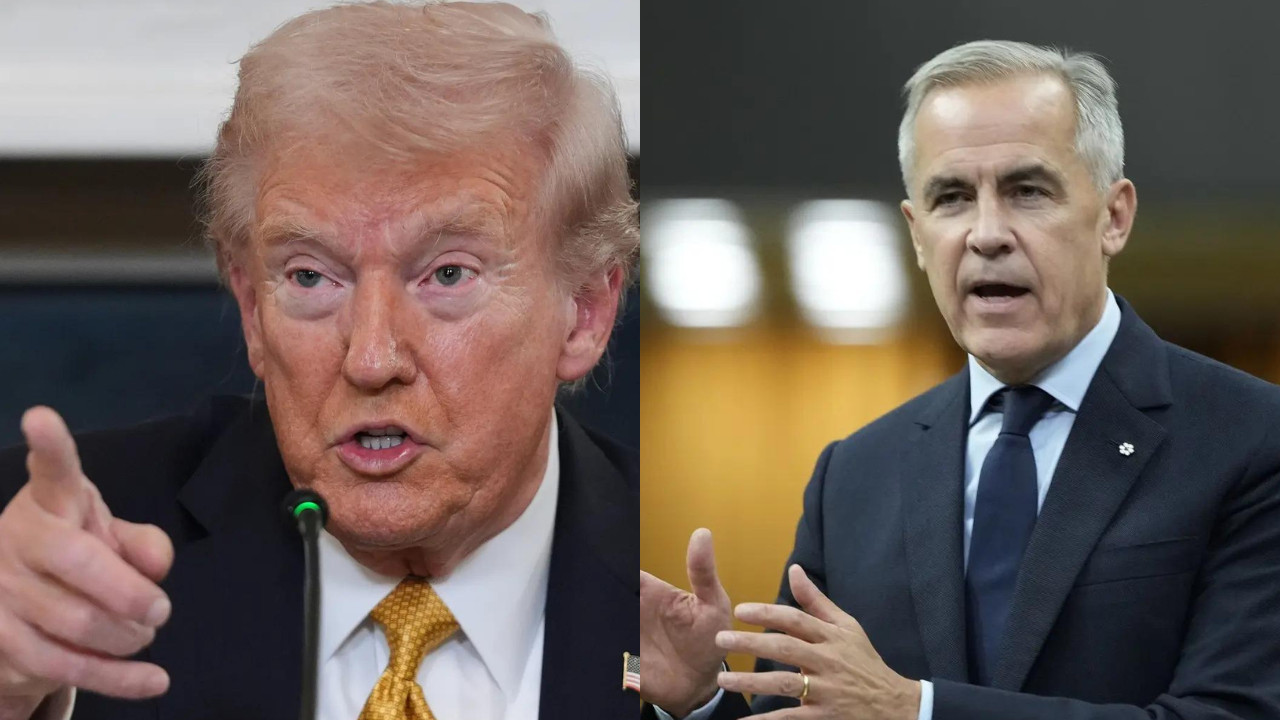
President Trump has halted all trade negotiations with Canada, citing a recent advertisement featuring Ronald Reagan protesting US tariffs as “egregious behavior.” The $75 million Ontario-funded ad uses Reagan’s words to warn against trade barriers. The Ronald Reagan Foundation has dismissed the ad as a misrepresentation and is considering legal action.
Lights Out for Trade Talks? The U.S. Pulls the Plug Over… TV Ads?
The relationship between the United States and Canada, usually portrayed as a friendly handshake across the border, has hit a snag. And the surprising culprit? Television commercials. Yes, you read that right. Trade talks between the two nations have reportedly stalled, not over lumber, dairy, or even pipelines, but over a dispute about the placement of American ads during Canadian sporting events.
This isn’t your typical trade war skirmish. It’s an eyebrow-raising situation that has many scratching their heads. What exactly is going on, and why did it lead to such drastic action? Let’s unpack this cross-border kerfuffle.
The Bone of Contention: Simultaneous Substitution
At the heart of the matter lies a practice known as “simultaneous substitution,” or “simsub.” For decades, Canadian broadcasters have been required to replace the signals of American channels with their own when airing the same program. This means that if you’re in Canada and watching the Super Bowl on an American network, your cable provider is legally obligated to swap out the American feed for the Canadian one, complete with Canadian commercials.
The reasoning behind simsub is to protect Canadian broadcasters’ advertising revenue. By ensuring that Canadian commercials are shown during popular events, the government aims to support the local broadcasting industry.


Why the U.S. is Seeing Red Over Canadian TV
The U.S. argues that simsub is unfair and harms American companies. American businesses pay for ads to reach a North American audience. When those ads are replaced by Canadian versions in Canada, they claim they are being denied the audience they paid for. The value proposition of reaching Canadians is directly impacted by this substitution. This loss of potential viewers, they contend, constitutes a significant financial loss.
Furthermore, some argue that simsub distorts the market and restricts consumer choice. Canadians who prefer the American broadcast, including its commercials, are effectively denied the opportunity to view it.
A History of Simsub Spats
This isn’t a new issue. The dispute over simsub has simmered between the two countries for years. The U.S. has long expressed its concerns, but previous attempts to resolve the matter through negotiation have failed. It is worth noting that disputes like these are common in trade agreements, and understanding international business is essential for navigating these complexities.
The Implications of Stalled Trade Talks
The decision to halt trade talks, even if seemingly over a relatively small issue, carries significant implications. It raises questions about the overall health of the relationship between the two countries and the willingness of both sides to compromise. While the disagreement is over a specific broadcasting policy, it could have a chilling effect on other areas of trade and cooperation.

The breakdown in discussions could also embolden other countries to challenge similar trade practices, potentially leading to a wave of trade disputes. It signals a potential shift towards a more protectionist stance, with countries prioritizing domestic interests over international agreements.
Where Do We Go From Here?
The future of trade talks between the U.S. and Canada is now uncertain. Whether the two sides can find common ground and resume negotiations remains to be seen. It will require a willingness from both nations to address each other’s concerns and find a mutually acceptable solution. The stakes are high, and the impact of this dispute could be felt far beyond the realm of television commercials. Only time will tell if cooler heads prevail and both countries can find a way to bridge this gap in the trade relationship.