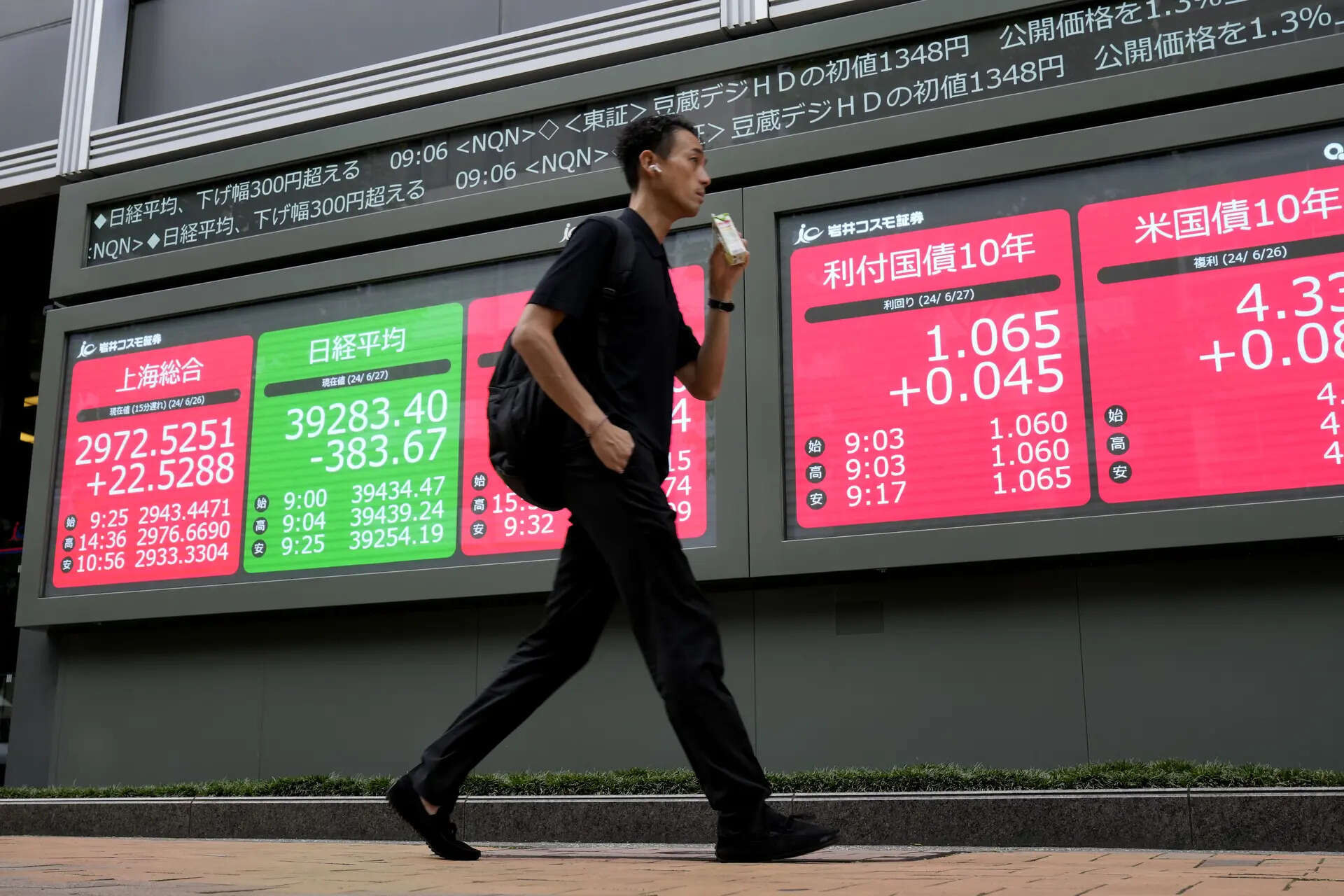
Asian stock markets declined Friday, mirroring Wall Street’s losses due to weak US economic data and interest rate uncertainty. Surging US layoff announcements reignited concerns about the labor market, while Fed officials signaled inflation remains a primary worry, tempering expectations of further rate cuts.
Navigating the Shifting Tides: Why Asian Markets Are Feeling the Chill
The global financial landscape feels a bit like a high-stakes poker game right now. One wrong move, and you could be facing significant losses. Recently, Asian markets have been experiencing some turbulence, mirroring a downturn that originated across the Pacific on Wall Street. But what’s driving this chill, and what does it mean for investors?
Overnight, Wall Street took a tumble, and as Asian markets opened, they felt the aftershocks immediately. The Hang Seng Index in Hong Kong, for instance, saw a significant drop, shedding over 240 points. The Kospi in South Korea experienced an even steeper decline. It’s a ripple effect that underscores the interconnected nature of the global economy. When the big players stumble, everyone feels it.
But it’s not just about blindly following Wall Street’s lead. A deeper dive reveals a complex web of factors influencing investor sentiment in Asia.
Decoding the Drivers of Market Volatility
Several elements are converging to create this cautious atmosphere. Inflation continues to be a major concern, not just in the West, but globally. Central banks are walking a tightrope, trying to curb rising prices without triggering a recession. This delicate balancing act is causing uncertainty, and uncertainty breeds market volatility.


Furthermore, geopolitical tensions are adding another layer of complexity. Events in Eastern Europe and elsewhere are contributing to anxiety and impacting supply chains, further fueling inflationary pressures. Investors are naturally wary of these uncertainties and are adjusting their portfolios accordingly.
China’s economic performance is also under close scrutiny. As the world’s second-largest economy, China’s growth trajectory has a significant impact on global markets. Any signs of a slowdown in China inevitably send ripples throughout the region, affecting everything from commodity prices to consumer demand. And, speaking of commodities, fluctuations in the price of oil and other crucial resources also play a key role in investor confidence.
How Asian Stock Exchanges are Responding
It’s important to remember that not all Asian markets are reacting in the same way. While some are experiencing significant downturns, others are showing more resilience. This divergence highlights the unique characteristics of each market and the specific factors influencing investor behavior in those regions.
For example, some markets heavily reliant on exports may be particularly vulnerable to global trade tensions. Others, with stronger domestic demand, might be better positioned to weather the storm. Understanding these nuances is crucial for anyone looking to invest in Asia.

What’s happening with the Asian stock exchanges right now has far-reaching implications. For everyday investors, it’s a reminder of the importance of diversification and long-term planning. Trying to time the market is often a losing game. Instead, focusing on building a well-balanced portfolio that can withstand market fluctuations is a more prudent approach.
For businesses, the current environment calls for adaptability and careful financial management. Understanding the risks and opportunities presented by market volatility is essential for making informed decisions and navigating the challenges ahead. We recently published a guide on [managing investment risk in volatile markets](internal-link-to-risk-management-article).
Looking Ahead: What’s Next for Asian Markets?
Predicting the future is always a risky business, especially in the fast-paced world of finance. However, one thing is clear: volatility is likely to remain a feature of the global market landscape for the foreseeable future. Factors such as inflation, geopolitical tensions, and uncertainty surrounding global growth will continue to influence investor sentiment.
The resilience of Asian economies, their ability to adapt to changing global conditions, and the policy responses of their respective governments will all play a crucial role in shaping the future trajectory of these markets. Investors should stay informed, remain disciplined, and focus on their long-term goals. Understanding the nuances of each specific market and seeking professional advice when needed is also important. The key takeaway is that navigating these shifting tides requires a combination of caution, knowledge, and a long-term perspective.