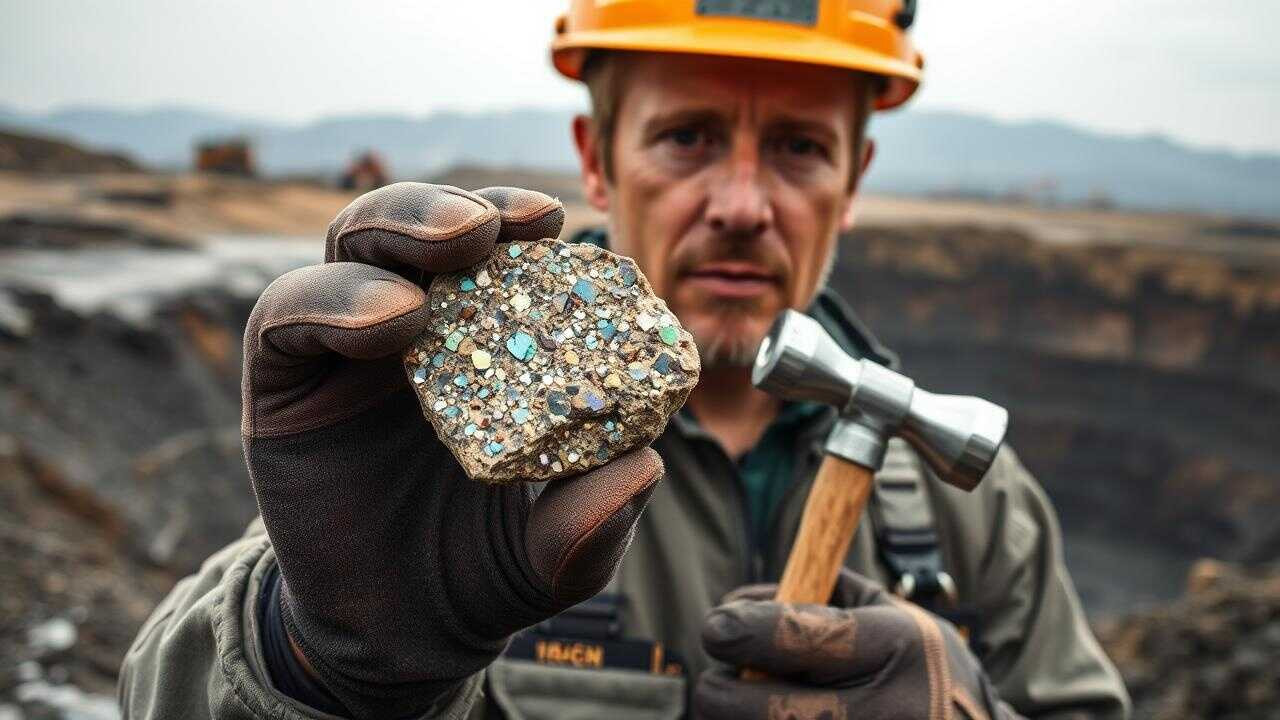
China’s decades-long dominance in rare earth elements, crucial for defense and technology, stems from extensive investment across the entire supply chain. Recent export curbs have alarmed global manufacturers, prompting nations like the US to seek alternative sources and rebuild domestic production capabilities, highlighting significant geopolitical risks.
The Dragon’s Hoard: Unraveling China’s Rare Earth Monopoly
Rare earth elements (REEs). The name conjures images of futuristic gadgets and cutting-edge technology, and for good reason. These unassuming metals are quietly powering our modern world, essential components in everything from smartphones and electric vehicles to wind turbines and advanced military weaponry. But there’s a catch: a single nation, China, holds a near-monopoly on their production and processing. How did this happen, and what does it mean for the rest of the world, particularly the United States?
The Accidental Advantage: China’s Rise to Rare Earth Dominance
China’s dominance wasn’t necessarily a master plan hatched in a Beijing boardroom. Instead, it was a confluence of factors that gave them a crucial head start. First, and perhaps most simply, China possesses vast reserves of these elements. While not exclusive to China, their deposits are significant.
Second, and arguably more importantly, China was willing to take on the environmentally challenging aspects of mining and processing rare earths. The refining process can be messy, generating significant waste and posing environmental risks. While other nations balked at the costs and potential environmental repercussions, China forged ahead, leveraging its lower labor costs and, initially, less stringent environmental regulations.
This combination allowed China to undercut global competitors, driving down prices and eventually pushing many Western mining operations out of business. By the 1990s, China had effectively cornered the market.

Why Rare Earth Elements Matter So Much
Rare earth elements possess unique magnetic, catalytic, and optical properties that make them indispensable in a wide array of applications. Neodymium and praseodymium, for example, are crucial in creating the powerful magnets used in electric vehicle motors and wind turbine generators. Dysprosium is added to magnets to maintain their strength at high temperatures. Cerium is a key component in catalytic converters for automobiles. The list goes on, and the demand is only increasing as the world transitions to cleaner energy and relies more heavily on advanced technologies.

This dependence creates a strategic vulnerability. If China were to restrict or cut off the supply of rare earths, it could cripple industries worldwide and significantly impact national security.
The US Response: Playing Catch-Up in the Rare Earths Race
The US, once a leader in rare earth production, is now playing catch-up. Recognizing the strategic importance of these materials, the US government and private companies are actively seeking to diversify the supply chain. This involves several key strategies:
* Reviving domestic mining: Efforts are underway to reopen and expand rare earth mining operations within the United States. This includes investing in new technologies to make mining more efficient and environmentally sustainable.
* Developing alternative sources: Exploration and investment in rare earth deposits in other countries, such as Australia and Canada, are being pursued to reduce reliance on China.
* Promoting recycling: Developing efficient methods for recycling rare earths from discarded electronics and other products can significantly reduce the need for newly mined materials. Read more about the future of sustainable materials here.
* Researching alternative materials: Scientists are exploring ways to substitute rare earths with more readily available materials in certain applications.

The challenge is significant. Re-establishing a robust rare earth industry requires substantial investment, technological innovation, and a long-term commitment. Moreover, it requires addressing the environmental concerns that initially contributed to the decline of domestic mining.
The Geopolitical Implications of Rare Earths
China’s dominance in rare earths has broader geopolitical implications. It gives China significant leverage in trade negotiations and could potentially be used as a tool of economic coercion. The US and other nations are keenly aware of this risk and are working to mitigate it through the strategies outlined above.
The race for rare earth dominance is not simply about access to materials; it’s about securing a competitive edge in the 21st-century economy. Nations that can control the supply chain for these critical elements will be well-positioned to lead in the development and deployment of future technologies.
A Future Forged in the Earth: Diversifying Rare Earth Sources
The global reliance on China for rare earth elements presents both a challenge and an opportunity. While China’s current dominance is undeniable, the push for diversification is gaining momentum. The revival of domestic mining in the US, coupled with the development of alternative sources and innovative recycling technologies, offers a path toward a more secure and resilient supply chain. The future of rare earths will likely be characterized by a more multipolar landscape, where no single nation holds absolute control. This diversified future is critical for ensuring global economic stability and fostering innovation in the years to come.