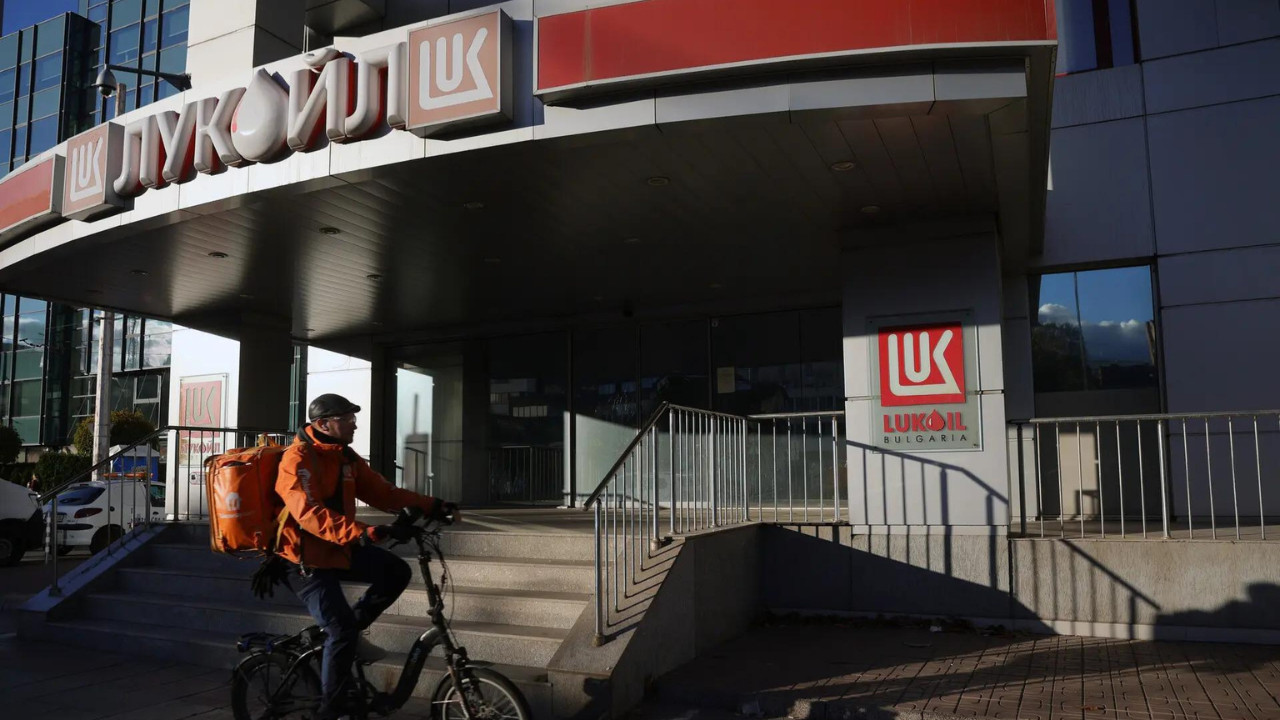
US authorities have temporarily eased sanctions on Lukoil-branded fuel stations outside Russia, allowing them to operate until April 2026. This move impacts stations in the US and elsewhere, while India faces a significant drop in Russian crude imports due to sanctions on Lukoil and Rosneft, impacting major refiners.
A Shift in Strategy: Navigating US Sanctions on Lukoil
The world of international sanctions is rarely a straightforward affair. Just when you think you have a firm grasp on the landscape, the rules shift, revealing a more nuanced reality beneath the surface. The recent developments surrounding US sanctions on Lukoil, the Russian energy giant, offer a prime example of this complexity. While sanctions remain in place, the US Treasury Department has quietly eased restrictions on Lukoil outlets operating outside of Russia, offering a glimpse into the intricate dance of economic pressure and strategic pragmatism.
For many, the initial reaction to sanctions against Russian entities following the conflict in Ukraine was one of firm resolve. Crippling the financial capabilities of major players like Lukoil was seen as a key tool in pressuring Russia to de-escalate. However, the global energy market is a delicate ecosystem. Disruptions to supply chains can have far-reaching consequences, impacting consumers worldwide.
The decision to grant an exemption for Lukoil gas stations and related operations outside Russia, valid until April 2026, highlights the delicate balancing act involved in crafting effective sanctions. The goal isn’t simply to punish; it’s to achieve specific policy objectives while minimizing unintended economic fallout. This exemption permits transactions “ordinarily incident and necessary” to dealings with the specified entities, primarily related to fuel purchases. It’s a calculated move, aiming to maintain stability in energy markets in certain regions without directly benefiting the Russian state within its own borders.


Why this selective approach? The most plausible explanation lies in the desire to avoid harming consumers and businesses in countries where Lukoil has a significant presence. Imagine a scenario where a country heavily reliant on Lukoil fuel supplies suddenly faced a shortage due to the sanctions. The resulting price spikes and economic instability could be counterproductive, potentially weakening international support for the broader sanctions regime.
This isn’t about softening the stance on Russia. The core sanctions remain in effect, targeting Lukoil’s activities within Russia and limiting its access to international financing. The exemption is a targeted adjustment, a fine-tuning of the sanctions regime to minimize collateral damage. It allows Lukoil stations abroad, particularly in countries dependent on their supply chains, to continue operating, ensuring a stable flow of fuel.
The implications of this decision are far-reaching. For consumers in Eastern Europe, for example, it could mean avoiding significant price increases at the pump. For businesses that rely on Lukoil for fuel supplies, it provides a degree of certainty in an otherwise volatile market. However, it also raises questions about the long-term effectiveness of sanctions that have caveats. Can a sanctions regime truly achieve its goals if it includes exemptions that allow sanctioned entities to continue operating, even in a limited capacity?
This recent move highlights the ongoing evolution of US sanctions policy. It’s not a static “one-size-fits-all” approach. Instead, it’s a dynamic process of assessment, adjustment, and recalibration. Sanctions are most effective when they are targeted, adaptable, and designed to achieve specific policy objectives without causing undue harm to innocent parties. It also calls into question what will happen after the April 2026 deadline; will the exemption be renewed, or will a new strategy be implemented?
To better understand the broader context of international sanctions, consider exploring the history of similar economic measures. This information can provide valuable insights into the potential consequences of sanctions and the factors that influence their effectiveness.
The decision to ease some US sanctions on Lukoil reveals the complex considerations that underlie international economic policy. It’s a reminder that sanctions are not simply about punishment; they are about achieving specific political and economic goals in a complex and interconnected world. The ongoing adjustments to the sanctions regime highlight the need for a nuanced and adaptable approach, one that takes into account the potential consequences for all stakeholders. Whether this adjusted strategy will ultimately prove effective in influencing Russia’s actions remains to be seen. The situation will require constant monitoring and reassessment as the conflict unfolds.