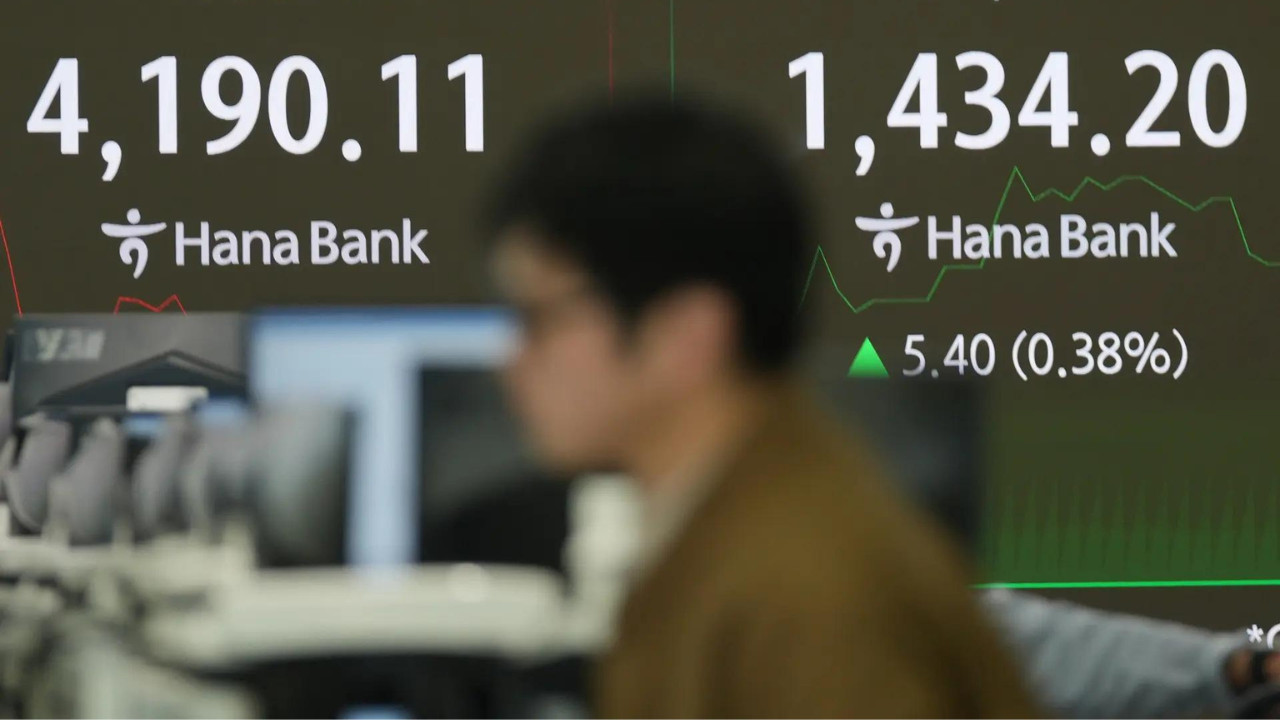
Asian stocks advanced for a second day as US lawmakers neared a resolution to the government shutdown, boosting global market sentiment. While the US budget deal progress lifted risk appetite, oil prices remained subdued due to oversupply concerns and slowing demand, exacerbated by new sanctions on Russian firms.
A Sigh of Relief in Asia: Markets React as US Shutdown Fears Fade
Asian markets are breathing a collective sigh of relief this week, shaking off some of the uncertainty that has been hanging in the air like monsoon humidity. A potential US government shutdown, a spectre that loomed large, appears to be receding, injecting a dose of optimism into trading floors across the continent. While the global economic landscape remains a complex tapestry woven with threads of both opportunity and risk, this particular cloud seems to be lifting, at least for now.
But what exactly is driving this newfound buoyancy? And how long can we expect it to last? Let’s delve into the key factors influencing the Asian markets right now.
The US Shutdown Drama: Averted (For Now)
The near-miss with a US government shutdown was a significant contributor to market anxiety. The potential ramifications of such an event are far-reaching, from disruptions to government services to a dent in investor confidence. The recent progress in Washington to avert this crisis has acted as a potent tonic for Asian markets. The mere possibility of averting such chaos is enough to inject some much-needed confidence into investors.


The ripple effect of this positive sentiment is tangible. Investors who were previously hesitant to commit capital are now showing a renewed appetite for risk, driving up stock prices and boosting trading volumes. This underscores the interconnectedness of global markets and the sensitivity of investor sentiment to political developments in major economies.
Oil Prices Under Pressure: A Mixed Blessing
While the reprieve from the shutdown threat is undoubtedly good news, another factor influencing the Asian markets is the persistent pressure on oil prices. Crude oil has been struggling to maintain its value, influenced by a combination of factors including concerns about global demand and increased supply from certain regions.
For some Asian economies, particularly those heavily reliant on oil imports, lower prices can act as a boon, reducing import costs and easing inflationary pressures. This can translate into increased consumer spending and stronger economic growth. However, for other nations that are significant oil producers, the situation is more complex, potentially impacting revenue streams and investment in the energy sector.
We might also see lower energy stocks suffer, which could offset the good news of cheap oil.
Navigating the Current Market Landscape: Caution and Opportunity

While the immediate outlook appears brighter, it’s crucial to remember that market sentiment can be fickle. Global economic uncertainty remains, with factors such as inflation, interest rate hikes, and geopolitical tensions continuing to cast a shadow. Investors should tread carefully, conducting thorough research and diversifying their portfolios to mitigate risk.
This is where understanding market dynamics becomes crucial. Rather than reacting impulsively to short-term fluctuations, investors should focus on long-term fundamentals, identifying companies with strong growth potential and solid financial performance. Consider the strength of individual companies in relation to the relative value of the currency to which they trade. Now is a great time to explore opportunities in emerging markets. Find our guide to navigating these volatile times with our in-depth article on [Investment Strategies for a Changing World](internal-link-to-investment-strategies).
Asian Stock Market Rise: A Sign of Resilience?
The recent rise in Asian stocks can be seen as a testament to the region’s underlying economic resilience. Despite facing numerous challenges, many Asian economies continue to demonstrate strong growth potential, driven by factors such as a growing middle class, increasing urbanization, and a commitment to technological innovation. This inherent strength provides a solid foundation for long-term investment and suggests that the region is well-positioned to weather future economic storms. The relative strength of certain Asian markets is particularly interesting when contrasted with other global markets.
In conclusion, while the near-term outlook for Asian markets has improved, vigilance remains key. By carefully assessing the risks and opportunities, and by focusing on long-term fundamentals, investors can navigate the current market landscape with confidence and potentially reap significant rewards. The aversion of a US shutdown has offered respite, but the long-term prognosis relies on more than just one event.