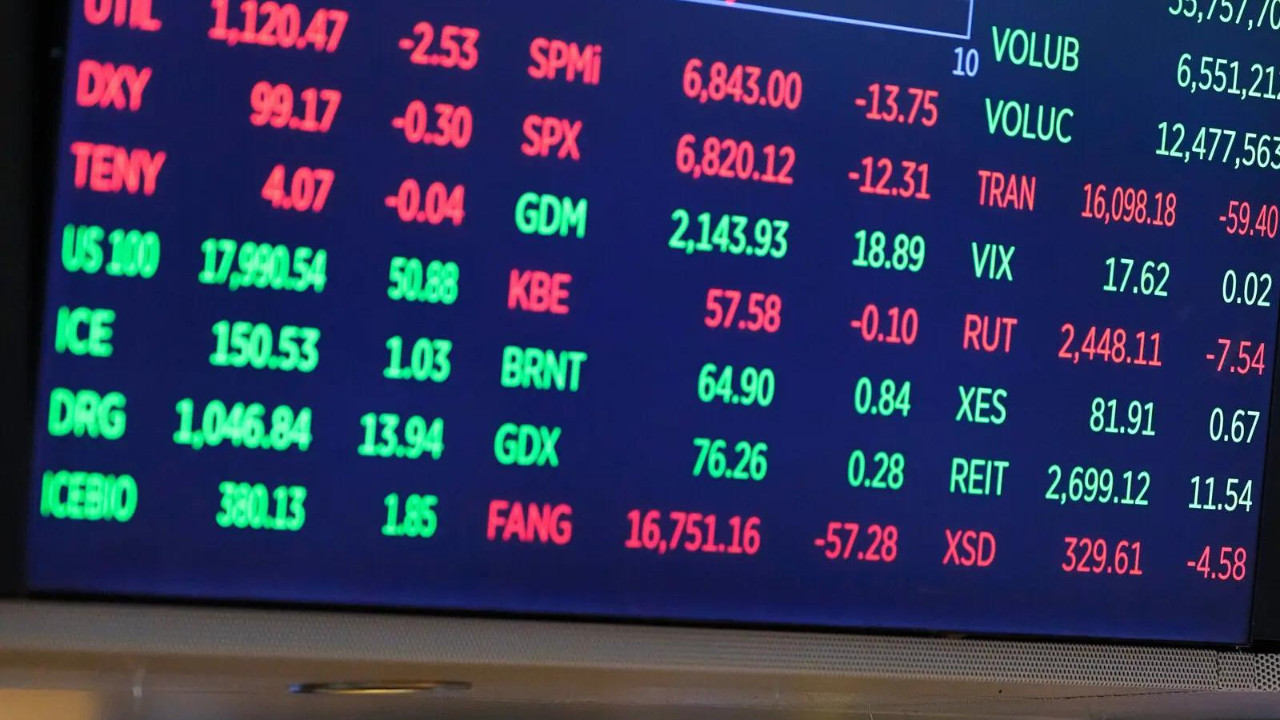
Asian markets opened steady as optimism for a US interest rate cut boosted risk appetite heading into December 2025. The Japanese yen strengthened on expectations of a policy shift from the Bank of Japan. Investors are closely watching upcoming US economic data and Federal Reserve commentary for further market direction.
Asia’s Markets: A Mixed Bag of Hope and Reality
The opening bell in Asia echoed with a cautious optimism today, a sentiment painted with brushstrokes of anticipation for potential US interest rate cuts. It’s like watching a tightrope walker – a delicate balancing act between current economic realities and the whispered promises of future easing. While some markets edged upwards, others stumbled, revealing a complex and nuanced picture across the region.
The pervasive hum surrounding potential interest rate cuts by the Federal Reserve has certainly injected a dose of hope into the Asian markets. The narrative goes that lower rates in the US would ease pressure on Asian currencies, encourage investment, and generally create a more favorable environment for growth. This prospect is acting as a tailwind, subtly pushing some indices higher. But it’s not a uniform force, and other factors are clearly at play.
Nikkei’s Downward Dip and the Yen’s Dance
Japan’s Nikkei index, for instance, took a noticeable tumble, shedding 1.3% of its value. This drop wasn’t solely due to the allure of US rate cuts; it was heavily influenced by fluctuations in the yen’s exchange rate. A stronger yen can hurt Japanese exporters, making their products more expensive for international buyers. This currency sensitivity highlights the intricate web of interconnectedness that defines global finance. It also underscores that anticipating the Fed’s moves is only one piece of the puzzle when it comes to understanding the performance of Asian stocks.
Hong Kong’s Hang Seng Bucks the Trend

Contrast that with Hong Kong’s Hang Seng index, which managed to post gains, demonstrating resilience amid the general uncertainty. This suggests that Hong Kong’s market has its own distinct drivers, perhaps fueled by specific sector strengths or investor confidence in the region’s long-term prospects. It demonstrates that broad trends don’t always paint the entire picture. Local dynamics and individual market characteristics still exert considerable influence.

Across the Region: A Patchwork Quilt of Performance
Beyond Japan and Hong Kong, the broader Asian market presented a mixed bag. South Korea’s KOSPI saw minor gains, while Australian shares remained relatively flat. These varying degrees of performance emphasize the divergent economic landscapes within Asia. Each country faces its own unique set of challenges and opportunities, impacting how they respond to global cues like potential US rate cuts. For example, Indonesia’s resource-rich economy reacts differently than Singapore’s finance-heavy market.
The anticipation of the US Federal Reserve’s next move is undeniably a major theme influencing market sentiment, but it’s crucial to avoid oversimplification. The real story is a complex interaction of global trends, regional nuances, and country-specific factors.
The Road Ahead: Cautious Optimism and Vigilant Observation

Looking ahead, the Asian markets are likely to remain sensitive to any signals emanating from the US regarding monetary policy. Every word from the Fed will be dissected and analyzed for clues about the timing and magnitude of future rate cuts. This heightened sensitivity underscores the extent to which global financial markets are intertwined. It is imperative to remember that real change takes time. The hope that surrounds Asian stocks and the promise of US rate cuts doesn’t necessarily translate into immediate or uniform gains.
The coming weeks will be crucial for observing how these dynamics play out. Will the promise of lower US rates be enough to sustain positive momentum across the region, or will other factors, such as local economic data and geopolitical events, take center stage? One thing is clear: navigating the Asian markets requires a blend of optimism and a healthy dose of caution. Staying informed and understanding the unique characteristics of each market is paramount for investors seeking to capitalize on the opportunities and mitigate the risks.
Ultimately, the performance of Asian stock markets hinges on a complex interplay of factors, demanding careful analysis and a balanced perspective. Want to delve deeper into understanding global market trends? Read our article on [the impact of geopolitical events on emerging markets](internal-link-to-related-content).