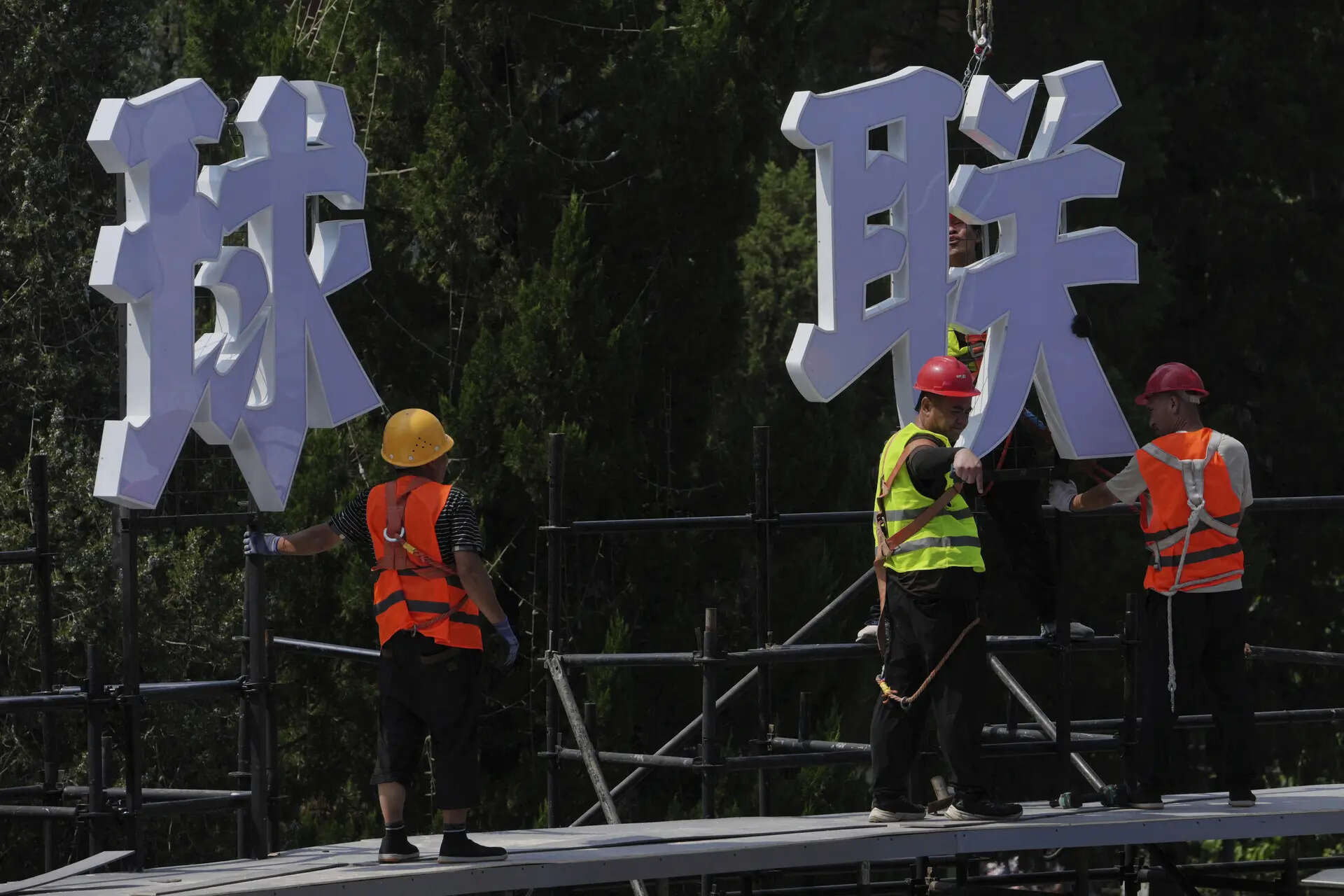
China’s consumer spending growth slowed to its weakest pace in over a year in October, with retail sales rising just 2.9%. This highlights ongoing challenges in boosting household confidence amid property market stress and external uncertainties. Factory output also missed expectations, indicating a broader economic slowdown.
China’s Shopping Spree Hits a Speed Bump: What’s Behind the Retail Slowdown?
For years, China’s booming retail sector has been a global economic engine, fueled by an ever-growing middle class eager to spend. But lately, that engine seems to be sputtering. Recent data reveals a significant slowdown in retail sales growth, the weakest since August 2024. So, what’s causing this unexpected deceleration in the world’s second-largest economy, and what does it mean for businesses and consumers worldwide?
The numbers paint a concerning picture. While retail sales did increase, the growth wasn’t nearly as robust as anticipated. This dip signals more than just a temporary blip; it suggests deeper, more systemic challenges at play. Several factors are converging to create this slowdown, both from within China’s borders and beyond.
External Headwinds Buffeting the Chinese Economy
The global economic landscape is far from smooth sailing. Geopolitical tensions, trade disputes, and anxieties over a potential global recession are all casting a long shadow. These external pressures directly impact consumer confidence. When people are worried about the future, they tend to tighten their purse strings. The uncertainty surrounding international relations directly affects businesses’ willingness to invest and expand, which in turn influences job security and wage growth – both crucial for fueling retail spending. 
Domestic Pressures Weighing on Consumer Sentiment
Beyond the global stage, China faces its own unique set of domestic challenges. The real estate market, a traditional pillar of the Chinese economy, is experiencing a period of instability. Concerns about property values and potential market corrections are understandably making consumers hesitant to make large purchases.

Furthermore, unemployment rates, particularly among younger demographics, remain a persistent concern. A lack of job opportunities dampens spending power and creates a general sense of unease. This affects the overall market, causing consumers to be more thoughtful about where their money goes.
These anxieties are further compounded by income inequality, which continues to be a significant issue. While some segments of the population enjoy considerable wealth, others struggle to make ends meet. This disparity in income levels means that a large portion of the population simply doesn’t have the disposable income to drive significant retail growth.
Is This Just a Temporary Setback for Retail Sales?
The burning question is whether this slowdown is a temporary blip or a sign of a more prolonged period of sluggish growth. Optimists point to China’s proven resilience and the government’s capacity to implement stimulus measures to boost the economy. Past performance does not guarantee future returns, but the government has resources. This might be a good starting point for a recovery.
However, others are more cautious, arguing that the underlying issues are too deep-seated for a quick fix. They emphasize the need for structural reforms to address income inequality, promote innovation, and create a more sustainable and inclusive growth model. If you’re interested in learning more about sustainable growth, check out our article on [ESG Investing Strategies](internal-link).
Navigating the New Normal in Chinese Retail
Regardless of the long-term outlook, businesses operating in China need to adapt to this new reality. This means taking a more nuanced and strategic approach to the market. Focusing on value-driven offerings, catering to specific consumer segments, and embracing e-commerce and digital marketing are all crucial for success. Retail sales are vital to the economy. Companies must adapt their marketing techniques to better reach the needs of Chinese consumers.

The days of relying on rapid, across-the-board growth are likely over. Now, it’s about understanding the changing consumer landscape, anticipating future trends, and building a resilient business model that can weather economic uncertainties.
In conclusion: China’s retail slowdown is a complex issue with both internal and external drivers. While the future remains uncertain, businesses that can adapt to the changing market dynamics and prioritize consumer needs will be best positioned to thrive in this evolving economic landscape. The situation demands a closer examination of consumer behavior, a reassessment of market strategies, and a commitment to innovation. It’s time to get smart, agile, and laser-focused on what Chinese consumers really want.