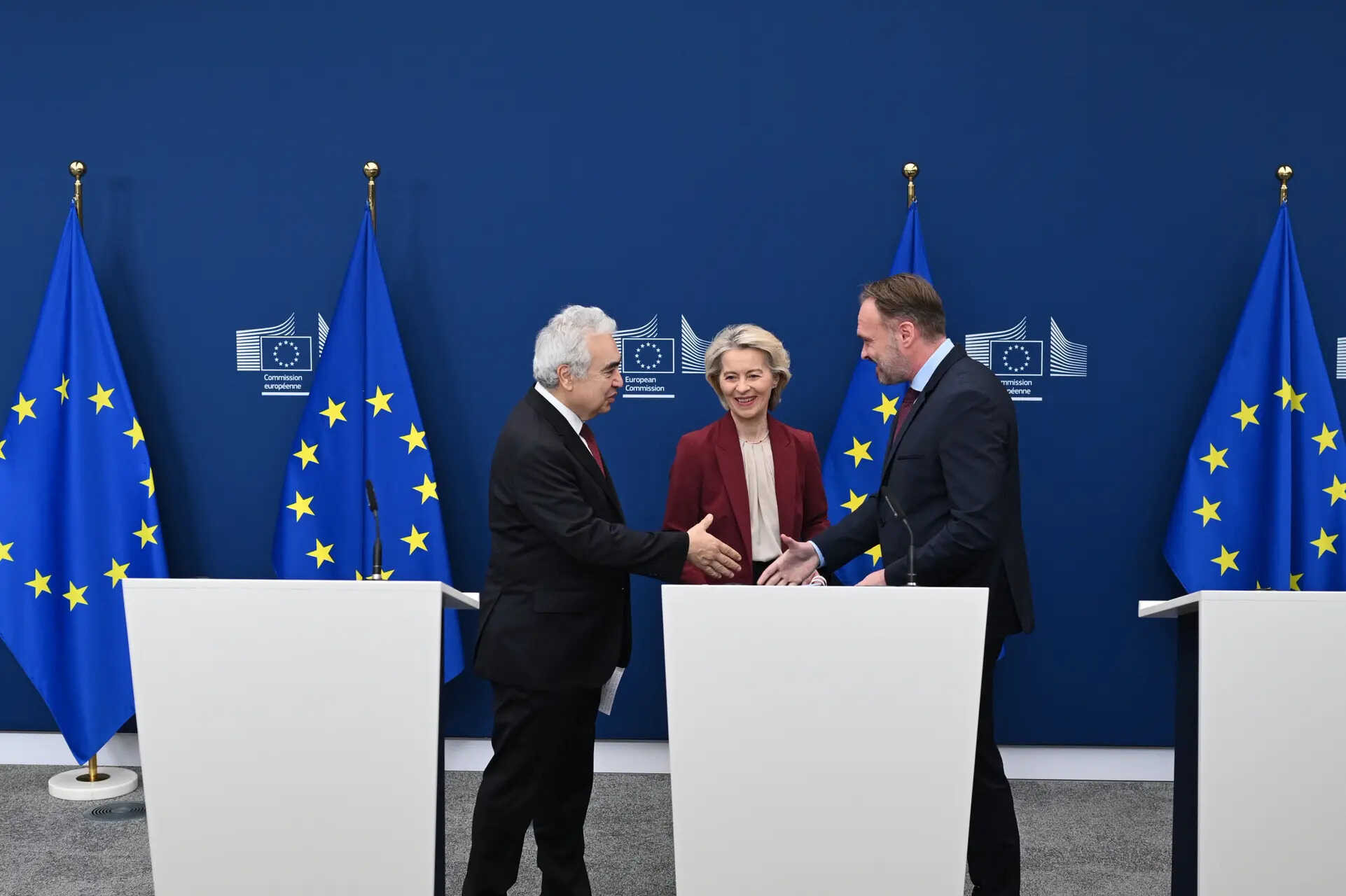
The European Union has agreed to completely halt Russian gas imports by autumn 2027, ending new long-term pipeline contracts by September 30, 2027, and LNG deals by January 1, 2027. This move aims to enhance energy security and independence, with a roadmap also being drafted to eliminate Russian oil imports to Hungary and Slovakia by the same deadline.
Europe’s Bold Move: Kicking the Russian Gas Habit by 2027
For years, Europe has been heavily reliant on Russia for its natural gas supply. But a seismic shift is underway, a determined push to untangle itself from this dependence and forge a new energy future. The European Union has set an ambitious goal: to completely eliminate Russian gas imports by 2027. It’s a bold plan fraught with challenges, but one the EU believes is essential for its security and long-term stability. So, how does Europe intend to achieve this monumental task?
The strategy isn’t a single silver bullet, but rather a multi-pronged approach that addresses both supply and demand. Think of it as a complex puzzle, with each piece playing a crucial role in the final picture.
Diversifying the Energy Basket: Finding New Sources
One of the primary strategies is, of course, diversification. The EU is actively seeking alternative gas suppliers, turning to countries like Norway, Algeria, and the United States for liquefied natural gas (LNG). These partnerships are crucial in bridging the gap left by reduced Russian imports. The scramble to secure new supply lines has seen intense diplomatic activity, with European leaders crisscrossing the globe to solidify deals and ensure a steady flow of gas.
New infrastructure is also vital. Expect to see investment in LNG import terminals, pipelines, and storage facilities. This will allow Europe to receive and distribute gas from these new sources effectively. Germany, for instance, has been rapidly constructing LNG terminals on its northern coast to receive shipments from the U.S. and other suppliers. This infrastructural investment signals a long-term commitment to a diversified energy future.


Ramping Up Renewables: The Green Energy Revolution
Beyond simply finding other fossil fuel providers, the EU is accelerating its transition to renewable energy sources. Solar, wind, hydro, and biomass are all part of the equation. Increased investment in these areas will not only reduce reliance on Russian gas but also contribute to the EU’s climate goals.
The EU’s REPowerEU plan, unveiled in the wake of the conflict in Ukraine, specifically emphasizes speeding up the deployment of renewables. This includes streamlining permitting processes for new renewable energy projects and providing financial incentives for homeowners and businesses to invest in solar panels and other green technologies. This initiative aims to significantly boost the share of renewable energy in the EU’s energy mix, creating a more sustainable and independent energy system. You can explore more about the EU’s broader energy goals here: [Link to a related article on renewable energy investments].
Energy Efficiency: Doing More with Less
Another key element is energy efficiency. Reducing energy consumption across all sectors—from households to industry—is essential to lessen the overall demand for gas. This involves improving building insulation, promoting the use of energy-efficient appliances, and encouraging behavioral changes that conserve energy.
The EU is implementing a range of policies to promote energy efficiency, including stricter building codes, energy labeling requirements for products, and financial support for energy-saving renovations. Industries are also being encouraged to adopt more efficient processes and technologies. Every unit of energy saved is a unit that doesn’t need to be imported, making energy efficiency a powerful tool in the quest for energy independence.
Navigating the Challenges: A Rocky Road Ahead

The transition away from Russian gas isn’t without its hurdles. Securing sufficient alternative supplies, building the necessary infrastructure, and accelerating the deployment of renewables all require significant investment and coordination. There are also concerns about the potential for short-term price spikes and supply disruptions as the EU weans itself off Russian gas.
The situation requires careful management and international cooperation. The EU needs to work closely with its partners to ensure a stable and affordable energy supply during the transition. It also needs to address concerns about the social and economic impacts of higher energy prices, particularly on vulnerable households and businesses.
Looking Ahead: A More Resilient Energy Future
Despite the challenges, the EU remains committed to its goal of eliminating Russian gas imports by 2027. This ambitious plan represents a fundamental shift in Europe’s energy strategy, one that will have far-reaching consequences for the continent and the global energy market. While the journey may be bumpy, the destination – a more secure, sustainable, and independent energy future – is well worth pursuing. The EU’s move away from Russian gas isn’t just about energy security; it’s about asserting control over its own destiny and building a more resilient future for generations to come.