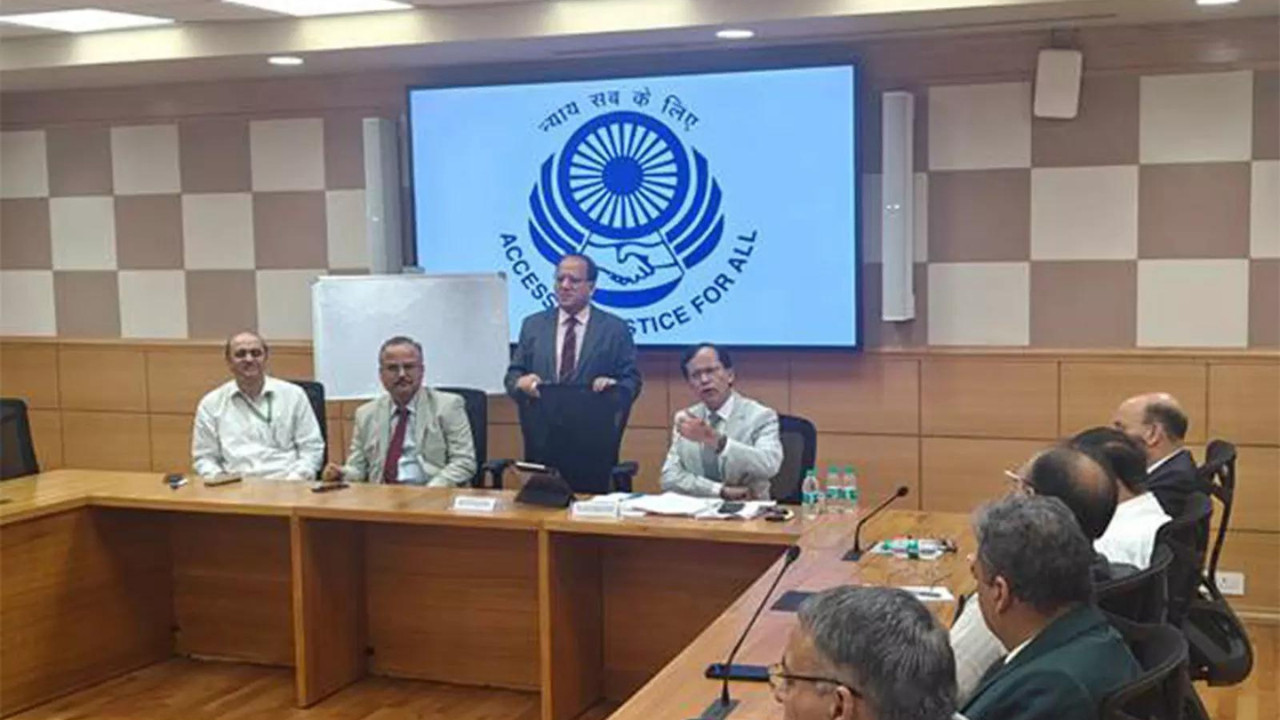
The Department of Financial Services, with the Supreme Court’s MCPC, recently conducted a 40-hour mediation training for DRT officers and public sector bank executives. Held in September, the programme highlighted alternative dispute resolution’s growing importance in the financial sector. Participants learned mediation fundamentals, negotiation, and dispute resolution techniques under RDB and SARFAESI Acts, receiving widespread appreciation for the initiative.
Equipping India’s Debt Recovery Tribunals with Cutting-Edge Mediation Skills
Imagine a world where financial disputes don’t necessarily lead to lengthy and costly court battles. Instead, skilled mediators help parties find common ground, preserving relationships and fostering a more cooperative economic environment. This vision is steadily becoming a reality in India, as a concerted effort is underway to bolster the mediation capabilities of officers serving in Debt Recovery Tribunals (DRTs) across the country.
The Department of Financial Services (DFS) and a panel constituted by the Supreme Court are spearheading this initiative, recognizing the immense potential of mediation as a powerful tool for resolving financial disagreements swiftly and effectively. The focus is on equipping DRT officers with advanced dispute resolution skills, transforming them into adept facilitators who can guide debtors and creditors towards mutually acceptable solutions.
Why this emphasis on mediation now? Well, the sheer volume of financial disputes clogging the courts is a significant concern. Traditional litigation can be time-consuming and expensive, often leaving both parties feeling frustrated and dissatisfied. Mediation offers a refreshing alternative – a chance to sit down, communicate openly, and explore creative solutions that address the underlying needs and interests of everyone involved.
This isn’t just about clearing a backlog; it’s about fostering a more constructive and collaborative approach to resolving financial difficulties. By promoting mediation, the DFS and the Supreme Court panel are aiming to create a more efficient and equitable financial ecosystem. This, in turn, can boost investor confidence, encourage responsible lending, and contribute to overall economic growth.

The training programs being rolled out are comprehensive and designed to equip DRT officers with the specific skills needed to navigate the complexities of financial disputes. Participants learn active listening techniques, effective communication strategies, and the art of identifying common ground amidst seemingly intractable disagreements. They also delve into the legal framework surrounding debt recovery and mediation, ensuring that any agreements reached are both fair and legally sound. The goal is to help DRT officers become experts in financial dispute mediation.

This initiative isn’t happening in isolation. It’s part of a broader push to promote alternative dispute resolution (ADR) mechanisms across various sectors in India. The government recognizes that ADR can play a crucial role in reducing the burden on the judiciary and promoting a more business-friendly environment. By investing in mediation training for DRT officers, the DFS and the Supreme Court panel are sending a clear signal that they are committed to embracing innovative approaches to dispute resolution.
The impact of this initiative is expected to be far-reaching. As more DRT officers become skilled mediators, we can anticipate a significant increase in the number of financial disputes resolved through mediation, leading to faster and more efficient outcomes for both debtors and creditors. This, in turn, can help to free up judicial resources, allowing courts to focus on more complex cases.
Furthermore, successful mediation can preserve valuable business relationships, which is particularly important in the context of small and medium-sized enterprises (SMEs). When disputes are resolved amicably through mediation, businesses are more likely to maintain their relationships with lenders and suppliers, enabling them to continue operating and contributing to the economy.

To learn more about alternative dispute resolution mechanisms and their potential benefits, explore our article on [Arbitration vs. Mediation: Choosing the Right Path](internal-link-to-related-content).
The move to prioritize mediation training for DRT officers signifies a forward-thinking approach to resolving financial disputes in India. It’s a significant step towards creating a more efficient, equitable, and collaborative financial landscape, one where disagreements are addressed not through protracted legal battles, but through constructive dialogue and mutually beneficial solutions. The dedication to expanding mediation skills within the DRTs promises a future where financial dispute resolution is not just about legal outcomes, but about building stronger, more sustainable economic relationships.