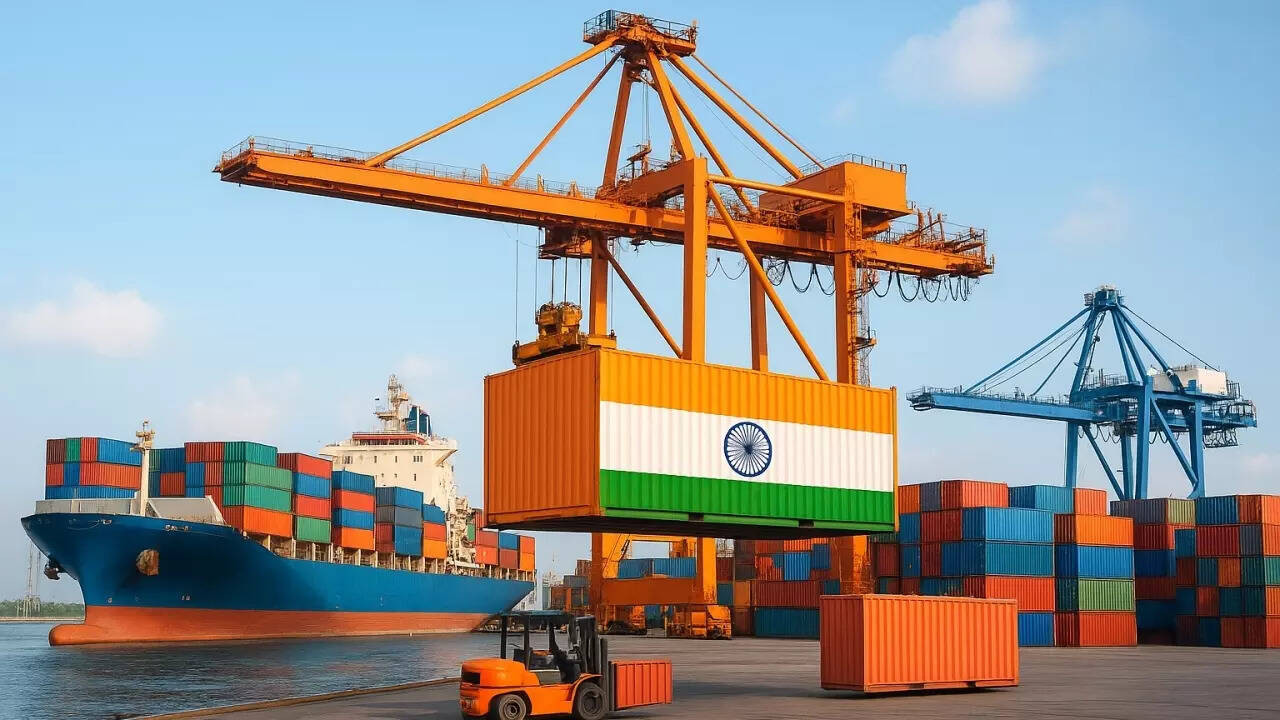
India’s merchandise exports show remarkable resilience amidst global economic headwinds, with total exports for April-October 2025 reaching $491.80 billion, a 4.84% rise. While October saw a dip in exports, overall growth indicates strength and diversification. Key import surges were noted from Switzerland, Hong Kong, and China.
Navigating the Global Headwinds: How India’s Exports are Staying Strong
The global economy feels like a ship navigating stormy seas. Volatility is the name of the game, with shifting winds and unpredictable currents impacting economies worldwide. Yet, amidst this turbulence, India’s export sector is demonstrating remarkable resilience, showcasing not just strength, but also a growing diversification that positions it well for the future.
Let’s dive into what’s fueling this positive trend. While whispers of a global slowdown have grown louder, India’s merchandise exports have held their ground, a testament to strategic policy decisions and the adaptability of Indian businesses. It’s not simply about holding steady; it’s about evolving and finding new paths to prosperity.
A Story of Strength: Analyzing the Export Data
The numbers tell a compelling story. Despite the gloomy forecasts, India’s export performance has remained surprisingly robust. Sectors like engineering goods, pharmaceuticals, and chemicals are contributing significantly, proving India’s manufacturing and technological capabilities are becoming increasingly competitive on the world stage. This isn’t accidental; it’s the result of consistent government initiatives aimed at bolstering manufacturing through schemes like “Make in India” and promoting export-oriented industries. These efforts are bearing fruit, fostering an environment where Indian businesses can thrive and compete effectively in the global marketplace. 
Diversification: The Key to Long-Term Resilience
One of the most encouraging aspects of India’s export story is its increasing diversification. No longer solely reliant on traditional sectors like textiles and agriculture, India is broadening its export basket to include high-value goods and services. This strategic shift reduces vulnerability to fluctuations in specific markets and commodities, making the overall export sector more resilient to global shocks. Think of it as spreading your investments – diversification helps mitigate risk and ensures more stable returns over time. This ability to adapt and evolve is critical for sustained growth in an ever-changing global landscape.
Furthermore, the government’s focus on promoting exports to new and emerging markets is paying dividends. By exploring opportunities beyond traditional partners, India is reducing its dependence on specific regions and creating new avenues for growth. This proactive approach is crucial for navigating the complexities of the global economy and ensuring the continued strength of India’s export sector. We discuss how these diversification initiatives are impacting specific sectors in our article about agricultural exports.
Government Support: A Catalyst for Growth
The government plays a vital role in fostering a conducive environment for exports. Initiatives such as streamlining customs procedures, reducing transaction costs, and providing financial incentives are helping Indian businesses become more competitive. The focus on infrastructure development, particularly in transport and logistics, is also critical for facilitating trade and ensuring the smooth movement of goods. Moreover, the government’s efforts to negotiate Free Trade Agreements (FTAs) with key trading partners are opening up new markets and creating opportunities for Indian exporters. These agreements not only reduce tariffs but also promote greater economic cooperation and integration, paving the way for increased trade and investment flows. This consistent support is instrumental in enabling Indian businesses to overcome challenges and capitalize on global opportunities.
Looking Ahead: Sustaining the Momentum
While the current performance is encouraging, maintaining this momentum requires continuous effort. Further investments in research and development, skills development, and technological innovation are crucial for enhancing the competitiveness of Indian industries. Encouraging collaboration between industry, academia, and government can also help drive innovation and create new export opportunities. It’s about constantly striving for improvement and staying ahead of the curve. Moreover, a renewed focus on sustainability and environmental responsibility is becoming increasingly important for accessing global markets. Businesses that adopt sustainable practices will not only contribute to a healthier planet but also gain a competitive edge in the long run. India’s merchandise exports need to embrace technological innovations to maintain their competitive advantage.

In conclusion, India’s export sector is demonstrating remarkable resilience in the face of global volatility. Strategic diversification, proactive government support, and the adaptability of Indian businesses are key factors driving this positive trend. While challenges remain, the future looks promising, provided that we continue to invest in innovation, sustainability, and skills development. The story of Indian exports is not just about economic growth; it’s about showcasing the nation’s strength and capabilities on the world stage.