Zooming into the Future: India’s Bullet Train Project Gains Momentum
Imagine gliding from Mumbai to Ahmedabad in a couple of hours, the landscape blurring outside your window as you travel at speeds previously unheard of on Indian rails. This isn’t some far-off fantasy anymore. India’s ambitious bullet train project, officially known as the Mumbai-Ahmedabad High-Speed Rail (MAHSR), is steadily transforming from a blueprint into reality, and recently cleared a major hurdle.
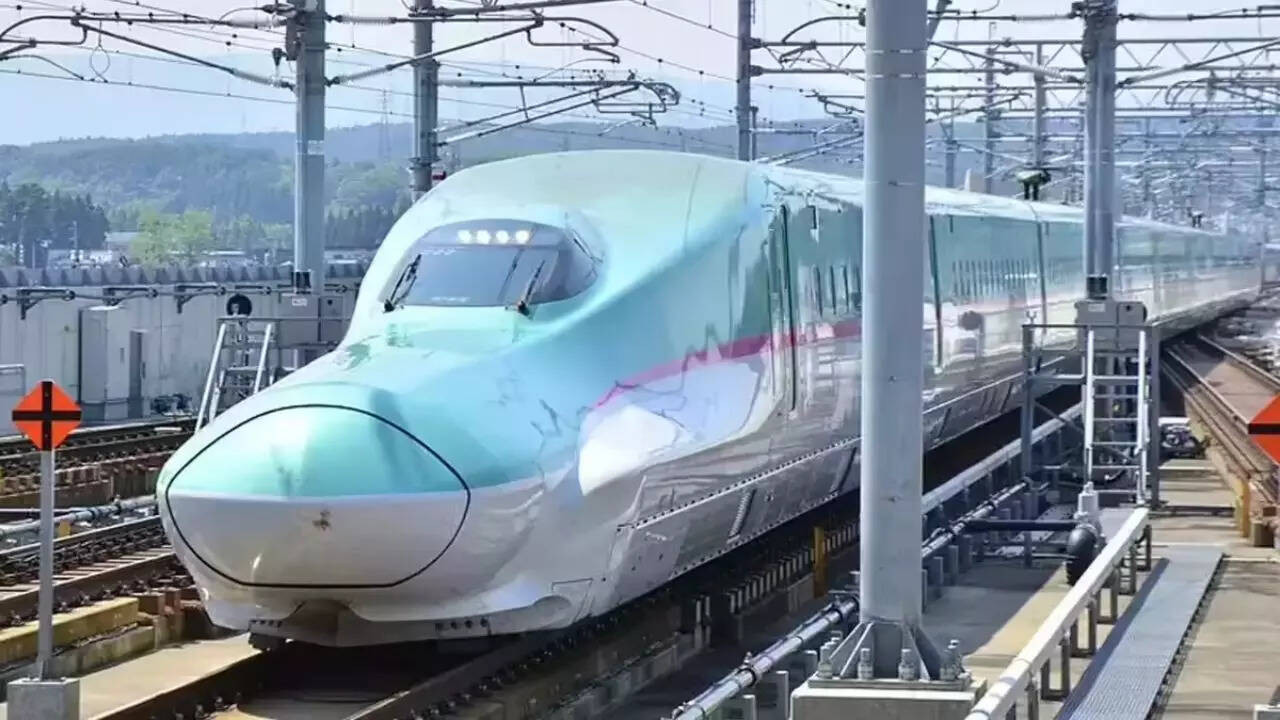
The dream of high-speed rail in India has been simmering for years, and the collaboration with Japan, leveraging their renowned Shinkansen technology, has injected a powerful dose of momentum. The recent milestone? The green light for the E5 Series Shinkansen, the very trains that will whisk passengers along this groundbreaking route, with a planned launch date of 2027.
What does this mean for the average Indian commuter and the nation’s infrastructure landscape? Let’s take a closer look.
The E5 Shinkansen: A Game Changer for Indian Railways?
The E5 Series Shinkansen is no ordinary train. It’s a marvel of engineering, designed for speed, safety, and comfort. These trains, already a familiar sight in Japan, represent a significant leap forward for Indian railway technology. They promise to slash travel time between Mumbai and Ahmedabad, opening up new possibilities for business travelers, tourists, and anyone seeking a faster, more efficient mode of transport.


The introduction of the Shinkansen is more than just about speed. It’s about upgrading the entire railway ecosystem. This project necessitates the development of new infrastructure, including dedicated high-speed tracks, signaling systems, and maintenance facilities. This overhaul has a ripple effect, pushing Indian Railways to adopt more advanced technologies and improve its overall efficiency. We’ve covered other recent advancements in Indian infrastructure, like the Bharatmala Pariyojana, on our blog, which you can read about here.
Beyond the Tracks: The Wider Impact of the Bullet Train
The benefits of the bullet train extend far beyond simply reducing travel time. The project is expected to generate significant economic activity, creating jobs in construction, manufacturing, and related industries. The development of high-speed rail corridors can also spur growth in the regions they connect, attracting investment and fostering economic development along the route. Imagine the possibilities for businesses and communities as access to major commercial centers becomes dramatically easier.
Furthermore, the Mumbai-Ahmedabad High-Speed Rail project serves as a catalyst for technological advancement in India. It fosters collaboration between Indian and Japanese engineers and technicians, promoting the transfer of knowledge and expertise in high-speed rail technology. This collaboration could lead to the development of indigenous capabilities in this crucial sector, paving the way for future high-speed rail projects in India.

Challenges on the Horizon
Of course, a project of this magnitude is not without its challenges. Land acquisition, environmental concerns, and the integration of new technology into the existing railway network are just some of the hurdles that need to be overcome. Delays have plagued the project in the past, but with the E5 Shinkansen now officially on board, there’s a renewed sense of optimism.
The successful implementation of the MAHSR project will require meticulous planning, efficient execution, and close collaboration between various stakeholders. Maintaining the highest safety standards is paramount, and ensuring affordability for the average passenger will be crucial to maximizing the project’s impact.
The Future of Travel is Accelerating
The Mumbai-Ahmedabad bullet train isn’t just about getting from point A to point B faster. It represents a significant step towards modernizing India’s transportation infrastructure and connecting its major economic hubs. With the E5 Series Shinkansen now cleared for launch, the dream of high-speed rail in India is rapidly becoming a tangible reality. The project holds the potential to transform the way Indians travel, boosting the economy, and ushering in a new era of connectivity. While challenges remain, the progress made so far suggests that India is well on its way to joining the ranks of nations with world-class high-speed rail networks. We can anticipate a future where travel is no longer a time-consuming ordeal, but a seamless and efficient experience.