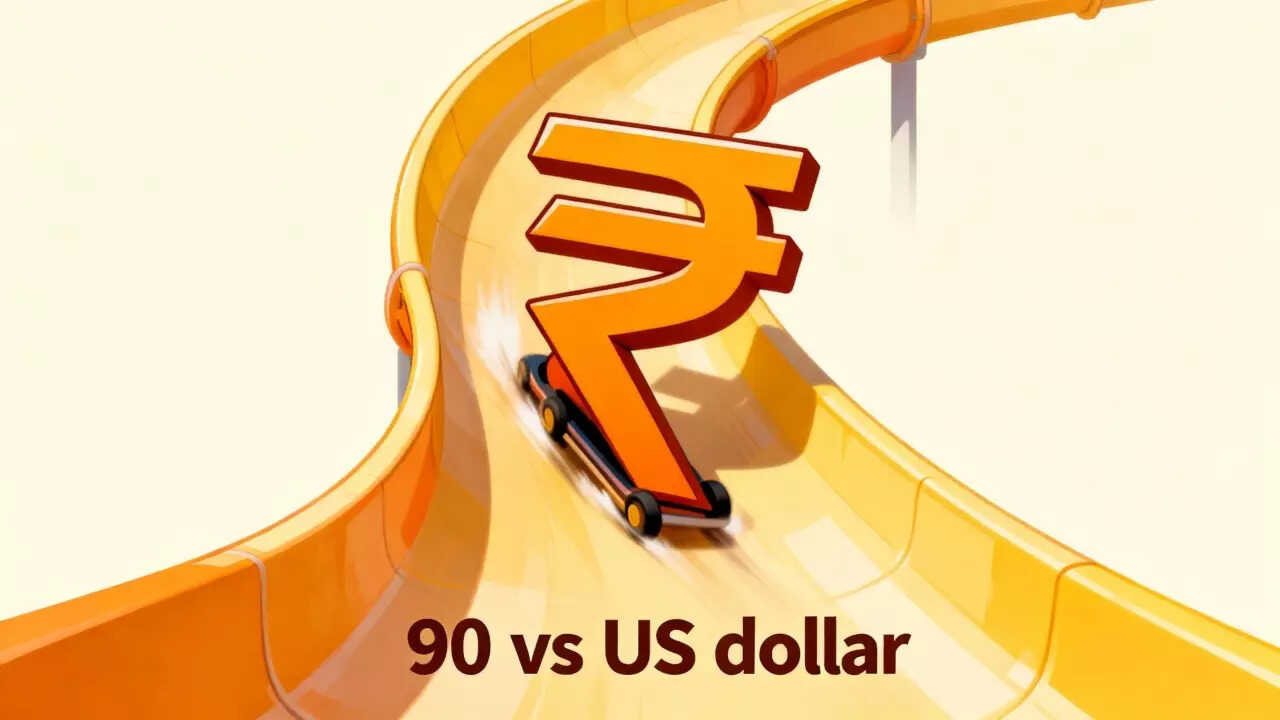
The Indian rupee has fallen below Rs 90 to the US dollar for the first time, signaling a shift in economic perception and impacting households. This depreciation, driven by trade tensions, investor exodus, and an RBI policy shift, makes imports costlier and affects education and travel expenses for citizens.
The Rupee’s Slide: What’s Happening and Why Your Wallet Feels It
The Indian Rupee has been on a bit of a rollercoaster lately, hasn’t it? You might have noticed that trip to the petrol pump feels a little heavier on the wallet, or that imported gadget you’ve been eyeing suddenly seems pricier. A big reason for that is the weakening of the Rupee against the US Dollar. So, what exactly is going on, and why should you care?
Understanding the Forex Flow: Why is the Rupee Slipping?
Imagine the foreign exchange market as a giant tug-of-war. On one side, you have the demand for Rupees. On the other, the demand for Dollars (or other currencies). When the demand for Dollars rises relative to Rupees, the Rupee weakens. Think of it like any other commodity – increased demand drives up the price of the demanded thing.
Several factors are contributing to this shift in demand. For starters, global economic uncertainties are pushing investors towards safe-haven assets like the US Dollar. When there’s turbulence in the world economy, people often flock to the perceived safety of the Dollar, increasing its demand and subsequently its value.
Another crucial element is the difference in interest rates. The US Federal Reserve has been aggressively raising interest rates to combat inflation, making Dollar-denominated assets more attractive to investors. This “higher return” lure pulls capital away from emerging markets like India, decreasing the demand for Rupees and further weakening its position.
Geopolitical tensions also play a significant role. Ongoing conflicts and global uncertainties create risk aversion, pushing investors towards safer currencies like the Dollar. This flight to safety puts downward pressure on the Rupee.


How a Weak Rupee Impacts Your Daily Life
This isn’t just some abstract economic concept; a weaker Rupee has very real consequences for your pocketbook. The most immediate impact is on imported goods. Because India imports a significant amount of goods, from electronics to crude oil, a weaker Rupee makes these imports more expensive.
Consider crude oil, for example. India imports a large portion of its oil needs. As the Rupee weakens, the cost of importing oil increases in Rupee terms. This, in turn, leads to higher petrol and diesel prices at the pump, directly impacting transportation costs and potentially contributing to overall inflation. This inflationary pressure impacts everything from food prices to transportation, making everyday life more expensive.
Beyond petrol, imported electronics, machinery, and even certain food items become pricier. This can affect the prices of consumer goods and industrial inputs, potentially impacting businesses and consumers alike.
The Flip Side: Potential Benefits of a Weaker Rupee
While a weaker Rupee presents challenges, it’s not all doom and gloom. There are potential benefits, particularly for exporters. A weaker Rupee makes Indian exports more competitive in the global market. This is because Indian goods and services become relatively cheaper for foreign buyers, potentially boosting export volumes and revenue.
Sectors like IT services, textiles, and handicrafts could see a boost in demand. Increased export earnings can contribute to economic growth and job creation. Additionally, tourism could also benefit as India becomes a more affordable destination for foreign tourists. For related reading, check out our article on how to analyze key economic indicators.

Navigating the Forex Fluctuations: Is a Rs 90 to a Dollar Inevitable?
Predicting the future of the Rupee is a tricky business. Numerous factors influence its value, and global events can quickly shift the landscape. However, the Reserve Bank of India (RBI) plays a crucial role in managing the Rupee’s volatility.
The RBI can intervene in the foreign exchange market by buying or selling Dollars to influence the Rupee’s exchange rate. It can also use monetary policy tools, such as adjusting interest rates, to attract capital inflows and support the Rupee. While the RBI’s interventions can help stabilize the Rupee, their effectiveness depends on the underlying economic fundamentals and global market conditions.
A future where 1 US dollar equals 90 Indian Rupees is not a certainty, but a definite possibility given current global economic trends.
Ultimately, the strength of the Rupee depends on a combination of factors, including India’s economic growth, inflation levels, fiscal policies, and global market dynamics. The dance between these factors will determine the Rupee’s path in the coming months. Paying attention to these indicators and understanding their potential impact is essential for both businesses and individuals navigating this ever-changing economic landscape.