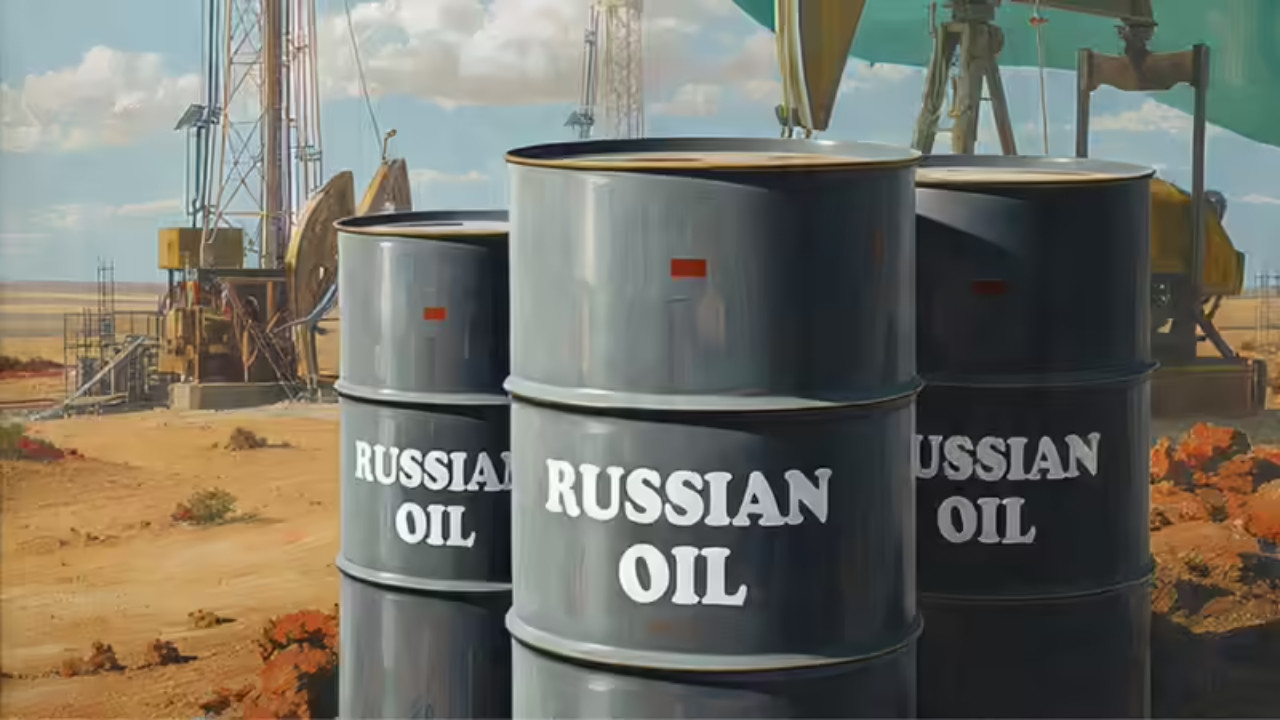
India received 5.4 million tonnes of Russian oil worth 2.1 billion euros via 30 vessels operating under false flags between January and September 2025, a report reveals. This highlights Russia’s use of a growing ‘shadow fleet’ to bypass Western sanctions, with India being a major recipient of these oil shipments.
The Murky Waters of Oil: How India Navigates the Shadow Fleet
The global energy landscape has been anything but predictable lately, and a recent report shines a light on one of its more intriguing corners: the “shadow fleet” transporting Russian oil. It turns out India has been a significant player in this drama, importing a substantial amount of crude via these unconventional channels. But what exactly is a shadow fleet, and why should we care?
Think of the shadow fleet as a clandestine network of aging tankers, often operating under complex ownership structures and flags of convenience. Their primary purpose? To circumvent Western sanctions imposed on Russia following the conflict in Ukraine. These aren’t your typical, well-insured, and easily traceable vessels. They’re often older, potentially riskier, and shrouded in secrecy – a maritime cloak-and-dagger operation playing out on the high seas.
And India’s connection? A report from the Centre for Research on Energy and Clean Air (CREA) reveals that India imported approximately 5.4 million tonnes of Russian crude oil via this shadow fleet. That’s a considerable amount, painting a picture of a nation strategically adapting to a reshaped global energy market.
Why the Shadow Fleet Matters for Global Oil Trade
The emergence of the shadow fleet is more than just a logistical quirk; it has far-reaching implications. Firstly, it allows Russia to continue exporting oil, albeit through a more convoluted route, mitigating the intended impact of Western sanctions. This directly affects global oil prices and the overall balance of supply and demand. If Russian oil were completely removed from the market, prices would likely surge, impacting consumers worldwide.


Secondly, the use of older tankers raises environmental concerns. These vessels are often less well-maintained, increasing the risk of spills and other maritime accidents. The lack of transparency surrounding the shadow fleet makes it difficult to track these vessels and enforce environmental regulations. Imagine the potential consequences of a major oil spill in a sensitive marine ecosystem, perpetrated by a ghost ship with no clear accountability.
India’s Balancing Act: Energy Needs and Global Relations
India’s reliance on the shadow fleet reflects a complex balancing act. As one of the world’s fastest-growing economies, India has a voracious appetite for energy. Access to affordable Russian oil, even via unconventional means, helps meet this demand and fuels economic growth. It’s a pragmatic choice driven by the need to secure reliable and cost-effective energy supplies for its massive population.
However, this strategy also carries potential risks. Increased scrutiny from Western nations is a real possibility. While India hasn’t violated any sanctions directly, its reliance on the shadow fleet could raise eyebrows and lead to diplomatic pressure. India needs to tread carefully, navigating its energy needs without jeopardizing its relationships with key international partners. This balancing act of securing vital resources while maintaining good diplomatic standing is a difficult position to manage.
The Future of the Shadow Fleet and Indian Oil Imports
The long-term viability of the shadow fleet remains uncertain. As Western nations tighten sanctions and increase scrutiny, it may become increasingly difficult and costly to operate these vessels. Insurance companies may become more reluctant to cover them, and ports may become less willing to allow them entry.

Despite the questions surrounding the shadow fleet, India’s demand for energy is unlikely to diminish. The nation will likely continue to explore various avenues to secure its energy needs, diversifying its sources and perhaps investing in alternative energy solutions. This is part of a long-term strategy to secure energy independence. It is also plausible, that India could pivot to other nations or oil markets if the shadow fleet proves unsustainable in the long term.
Ultimately, the story of India and the shadow fleet highlights the intricate and ever-evolving dynamics of the global energy market. It’s a tale of sanctions, supply chains, and strategic maneuvering, with significant implications for both the global economy and the environment. How India continues to adapt will be crucial to its growth and the stability of the global energy landscape.
Conclusion:
India’s use of the shadow fleet to import Russian oil presents a complex scenario, balancing economic needs with international relations. The long-term sustainability of this approach is questionable, pushing India to explore diverse energy solutions and potentially reshape its energy strategy in the face of evolving global pressures. To further understand the impact of geopolitical events on global markets, read about [India’s trade relations post-conflict](internal-link).