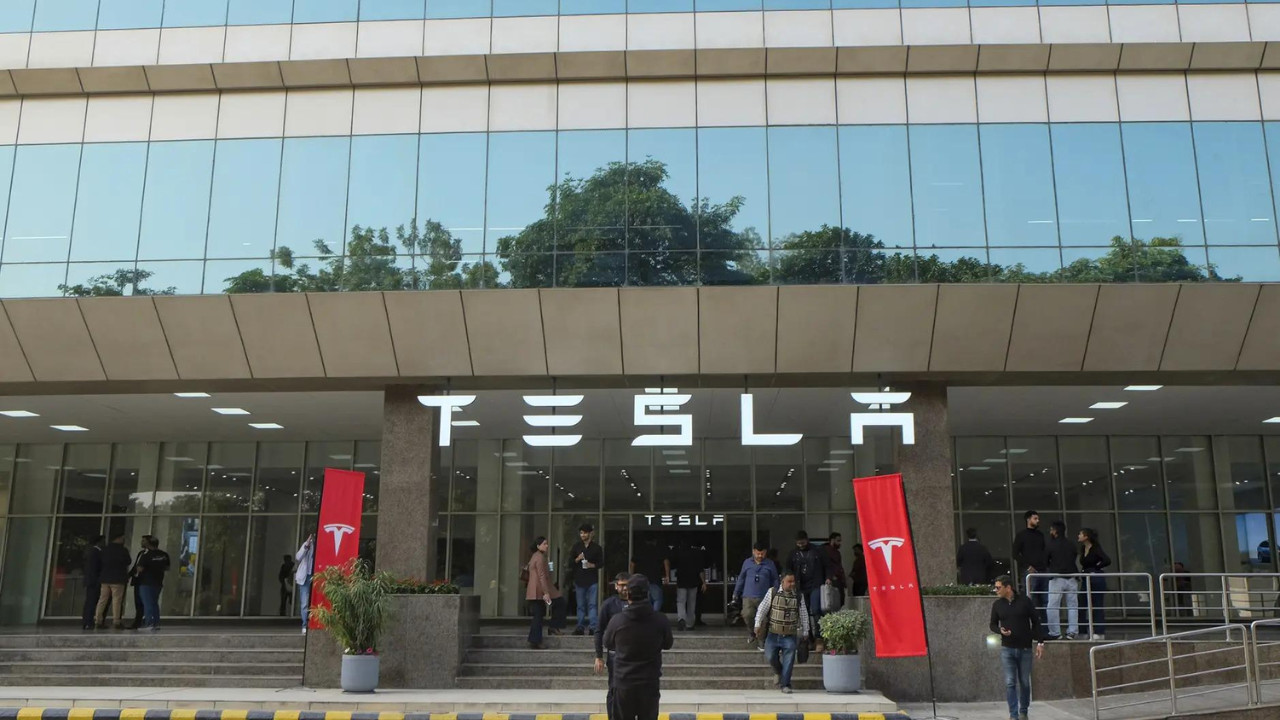
Tesla, the trailblazer in the US electric vehicle market, is ready to redefine driving costs in India. With an impressive four-year window of minimal service requirements bolstered by cutting-edge over-the-air updates and remote maintenance, this EV titan is making waves. Additionally, Tesla is ramping up its presence with a new all-encompassing experience center in Gurugram, alongside an expanding supercharger network.
Decoding the Future: Will Tesla Really Be Light on Your Wallet in India?
The buzz around Tesla’s potential entry into the Indian market has been deafening. While the initial price tag of these electric vehicles might raise eyebrows, a less-discussed aspect is starting to gain traction: the long-term running costs. Could owning a Tesla in India actually be cheaper than running a conventional petrol or diesel car? Let’s delve into the factors at play and see if the electric dream lives up to the hype.
One of the most compelling arguments for Tesla’s low running cost lies in the fundamental difference between electric and internal combustion engines. Traditional cars rely on the combustion of fossil fuels, a process that requires regular and expensive fill-ups. Tesla, on the other hand, runs on electricity, which, even with India’s varying electricity prices, generally works out cheaper per kilometer compared to petrol or diesel.
Imagine this: you’re stuck in Bangalore traffic, the meter ticking away as your fuel gauge steadily drops. Now picture the same scenario in a Tesla. While you might be consuming some battery power, it’s significantly less than the rate at which a petrol engine burns fuel idling. This difference becomes even more pronounced during short commutes within congested cities, a daily reality for millions of Indian drivers.
But it’s not just fuel (or rather, electricity) consumption that impacts the overall cost. Regular maintenance is another key differentiator. Internal combustion engines have hundreds of moving parts, all susceptible to wear and tear, requiring frequent servicing, oil changes, and replacements. Tesla, with its relatively simpler electric powertrain, dramatically reduces the need for such maintenance. No oil changes, no spark plugs, and fewer moving parts mean fewer trips to the mechanic and significantly lower maintenance bills over the lifespan of the vehicle.

Then there’s the issue of regenerative braking. Tesla’s regenerative braking system captures kinetic energy during deceleration and converts it back into electricity, effectively charging the battery. This not only extends the range of the vehicle but also reduces wear and tear on the brake pads, leading to further savings on maintenance costs. Think of it as getting free kilometers on every downhill stretch or every time you ease off the accelerator!
However, the equation isn’t quite that simple. Factors like the initial purchase price, battery life, and charging infrastructure play a crucial role. While Tesla’s running costs might be lower in the long run, the upfront investment is significantly higher compared to conventional cars. Battery replacements, although not a frequent occurrence, can be a substantial expense. And the availability of charging infrastructure, while improving, is still a concern in many parts of India.

Furthermore, electricity prices in India vary considerably from state to state. The cost of charging a Tesla will depend on the prevailing electricity rates in your region, and this can impact the overall savings. Home charging is generally more economical than using public charging stations, but not everyone has access to a dedicated charging point.
The Indian government is actively promoting electric vehicle adoption through various incentives and subsidies. These incentives can help offset the high initial cost of a Tesla and make it a more attractive proposition for potential buyers. Additionally, initiatives to expand the charging infrastructure are underway, which will further reduce range anxiety and make electric vehicles more practical for everyday use. Read more about the Indian government’s EV initiatives on our dedicated page about [Electric Vehicles in India](electric-vehicles-india).

Ultimately, whether a Tesla offers lower running costs in India depends on individual driving habits, charging patterns, and regional electricity prices. However, the potential for significant savings in fuel and maintenance costs is undeniable. As technology advances, battery prices come down, and charging infrastructure expands, the equation will likely become even more favorable for electric vehicles like Tesla. The dream of a greener, more sustainable, and potentially cheaper commute might be closer than we think.
Slug suggestion: tesla-running-cost-india
Focus Keyword: Tesla’s low running cost
Conclusion: The prospect of Tesla’s low running cost in India is promising, pivoting towards potential savings in the long term. While high initial costs and evolving infrastructure present current challenges, the long-term advantages of reduced fuel and maintenance, coupled with government support, position Tesla as a potentially cost-effective option for future-thinking Indian drivers. Continued technological advancement and infrastructure development will likely solidify this advantage, paving the way for a greener and more economical transportation landscape in India.