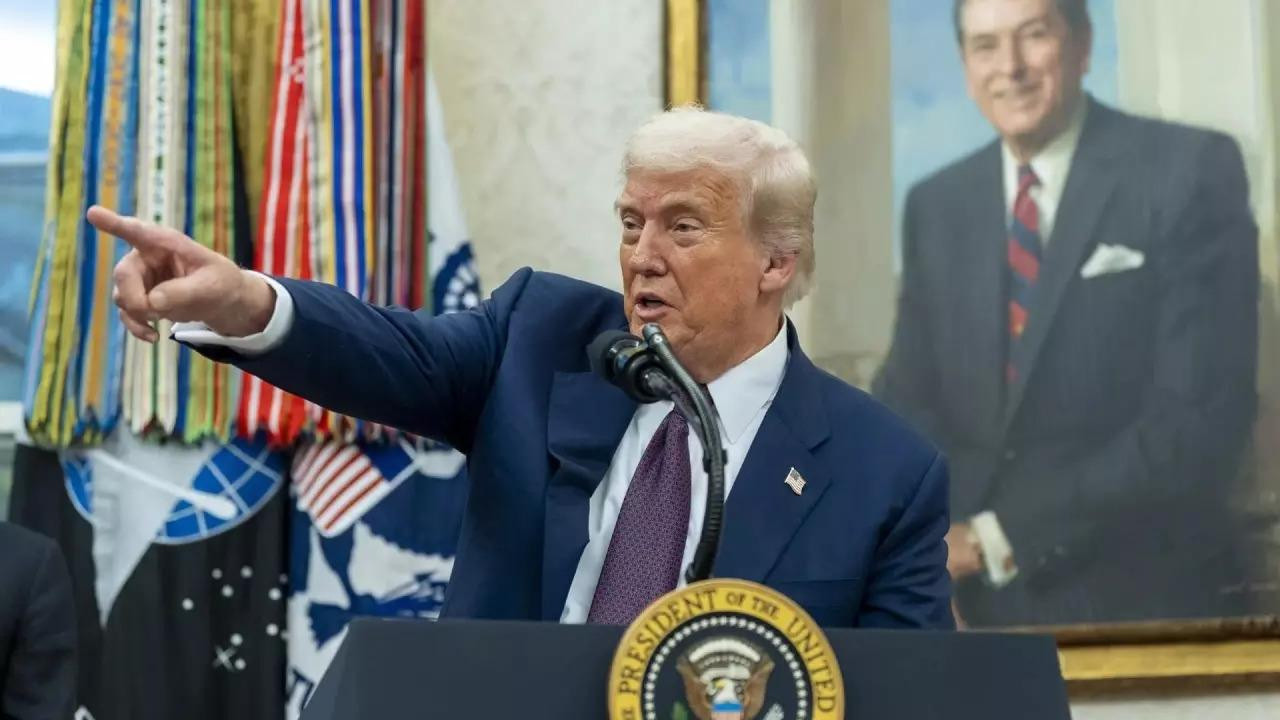
President Trump announced new reciprocal tariffs effective at midnight, targeting countries allegedly exploiting the US. He claimed billions would flow into the US, attributing potential obstacles to a “radical left court.”
Will Trump’s “Reciprocal Tariffs” Reshape Global Trade?
Donald Trump’s economic policies are never dull, and his latest proposal, dubbed “reciprocal tariffs,” is generating considerable buzz—and anxiety—across the globe. The idea, simple in concept but potentially seismic in impact, is that if another country imposes a tariff on American goods, the U.S. will respond in kind, matching that tariff exactly. But will this dramatically alter the landscape of global trade, or is it just another negotiating tactic?
The former president argues that this approach will level the playing field, ensuring that American businesses aren’t unfairly disadvantaged by protectionist measures elsewhere. Imagine a scenario where Country X slaps a 20% tariff on imported American cars. Under Trump’s reciprocal tariff plan, the U.S. would then impose a 20% tariff on goods imported from Country X. The goal? To deter other nations from imposing tariffs in the first place, leading to fairer trade relationships.

The allure of this policy, at least from a certain perspective, is its perceived simplicity and directness. Instead of navigating complex trade agreements and lengthy negotiations, the U.S. would respond swiftly and decisively to any perceived unfairness. This resonates with those who feel that existing trade deals have failed to adequately protect American interests.

However, the potential ramifications are complex and could easily lead to unintended consequences. A tit-for-tat tariff war could quickly escalate, disrupting supply chains, raising prices for consumers, and ultimately harming the global economy. Businesses that rely on imports of raw materials or components would be particularly vulnerable, as would consumers who depend on affordable imported goods.
The world has witnessed trade disputes ignite economic downturns. The concern is that reciprocal tariffs, if implemented aggressively, could exacerbate existing tensions and trigger a wider global recession. The potential for miscalculation and overreaction is significant, especially in a world already grappling with economic uncertainty. It’s a high-stakes game of chicken with the global economy hanging in the balance.
One of the central arguments against reciprocal tariffs is their potential to backfire. While the intention might be to force other countries to lower their tariffs, the reality is that they could simply retaliate, leading to a cycle of escalating tariffs that benefits no one. This scenario could be particularly damaging for American exporters, who would face higher barriers to entry in foreign markets.
Furthermore, the implementation of reciprocal tariffs would likely require a significant overhaul of existing trade laws and regulations. Determining the appropriate response to foreign tariffs would be a complex and potentially contentious process, potentially leading to legal challenges and disputes.
The debate surrounding reciprocal tariffs highlights a fundamental tension in trade policy: the balance between protecting domestic industries and promoting free trade. While protectionist measures might offer short-term benefits to certain sectors, they often come at the expense of the broader economy. [Read more about the benefits of global trade here.](https://example.com/global-trade-benefits)

Ultimately, the success or failure of reciprocal tariffs would depend on a number of factors, including the willingness of other countries to cooperate, the ability of the U.S. to enforce its policies effectively, and the overall health of the global economy. It’s a gamble with potentially huge payoffs, or equally devastating consequences.
Whether the “reciprocal tariffs” become a cornerstone of future U.S. trade policy or fade away as a fleeting proposal remains to be seen, but one thing is certain: the debate surrounding their potential impact will continue to shape the conversation about global trade for years to come.