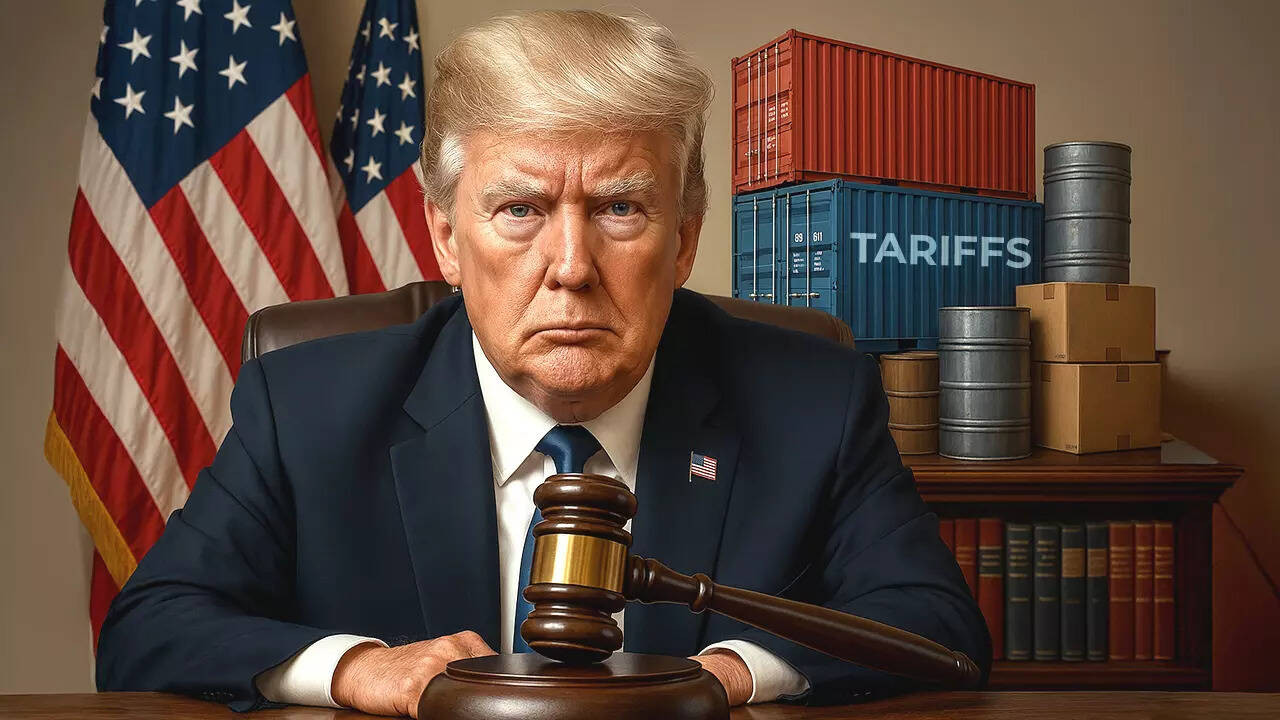
The Congressional Budget Office has revised its deficit reduction forecast for President Trump’s tariffs, now projecting $3 trillion over a decade, down from $4 trillion. This adjustment stems from updated data and recent tariff changes. While critics argue consumers bear tariff costs, the White House maintains foreign exporters pay, generating significant revenue.
The Tariff Tango: How Trump’s Trade Policies are Reshaping the Deficit Picture
Remember the buzz around potential deficit reduction? Well, the Congressional Budget Office (CBO) just delivered a bit of a reality check. The projected deficit cut over the next decade isn’t quite as substantial as previously estimated – it’s been trimmed by a cool $1 trillion. What gives? The story is a bit more nuanced than a simple budgetary miscalculation. It boils down to a revised economic outlook, driven in part by the lingering effects of those hefty tariffs imposed during the Trump administration.
The CBO’s updated analysis points to a couple of key factors influencing this downward revision. For starters, they’ve adjusted their expectations for inflation and interest rates. These seemingly small tweaks have a ripple effect throughout the entire economic model, impacting everything from government revenue to the cost of borrowing. And then there’s the elephant in the room: trade.

Decoding the Tariff Impact: The trade landscape, particularly in light of the tariffs implemented under former President Trump, is proving to be a significant drag on economic growth. These tariffs, intended to protect domestic industries and level the playing field with trading partners like China, have instead introduced a new set of challenges.

While proponents argued that tariffs would boost American manufacturing and reduce the trade deficit, the reality has been far more complex. Businesses, forced to pay higher prices for imported goods and materials, have passed those costs on to consumers, contributing to inflationary pressures. This increased consumer cost has hampered demand, leading to reduced economic output. The CBO’s analysis explicitly recognizes this dampening effect, incorporating the long-term consequences of these trade barriers into their deficit projections.
Data Revisions Add Another Layer: It’s not just about economic projections either. The CBO also factored in revised data on tax revenue and spending. These adjustments, based on more recent figures, provide a clearer picture of the government’s fiscal position. The revised economic outlook included data rate changes that further drove the downgrade, but these changes are less talked about than the impact of tariffs.
Beyond the Headlines: The Broader Economic Picture
What does all this mean for the average American? For starters, it underscores the interconnectedness of the global economy. Policies enacted with the best intentions can have unintended consequences, impacting everything from your grocery bill to the government’s ability to invest in essential programs. The tariff impact can be felt across various sectors.
The revised deficit projections also raise questions about the long-term sustainability of the national debt. With economic growth potentially hampered by trade barriers and rising interest rates, policymakers will face increasing pressure to make difficult choices about spending and taxation. Discussions about tax reform and strategic investments in infrastructure and education will likely intensify as the government seeks ways to bolster economic growth and reduce the debt burden.

Navigating the Future: Economic Policy and the Deficit
The CBO’s revised projections offer a valuable opportunity to re-evaluate current economic policies and consider alternative approaches. While tariffs may have been intended to create jobs and boost domestic industries, the data suggests that they may be hindering economic growth and contributing to the long-term deficit. As policymakers grapple with these challenges, a more nuanced and data-driven approach to trade policy will be crucial. A better understanding of supply chain vulnerabilities and targeted support for key industries, rather than broad-based tariffs, may be a more effective strategy for fostering long-term economic prosperity. This situation also highlights the need for policies that foster innovation and productivity growth, ensuring that the U.S. economy remains competitive in the global marketplace. See this related article on [US economic health indicators](internal-link).
Ultimately, addressing the long-term deficit requires a multi-pronged approach that combines responsible fiscal management, strategic investments in economic growth, and a pragmatic approach to trade policy. The updated CBO projections serve as a valuable reminder that economic policymaking is a complex and ever-evolving process, requiring constant evaluation and adaptation in response to changing circumstances. Understanding the true tariff impact on the economy is paramount to that process.