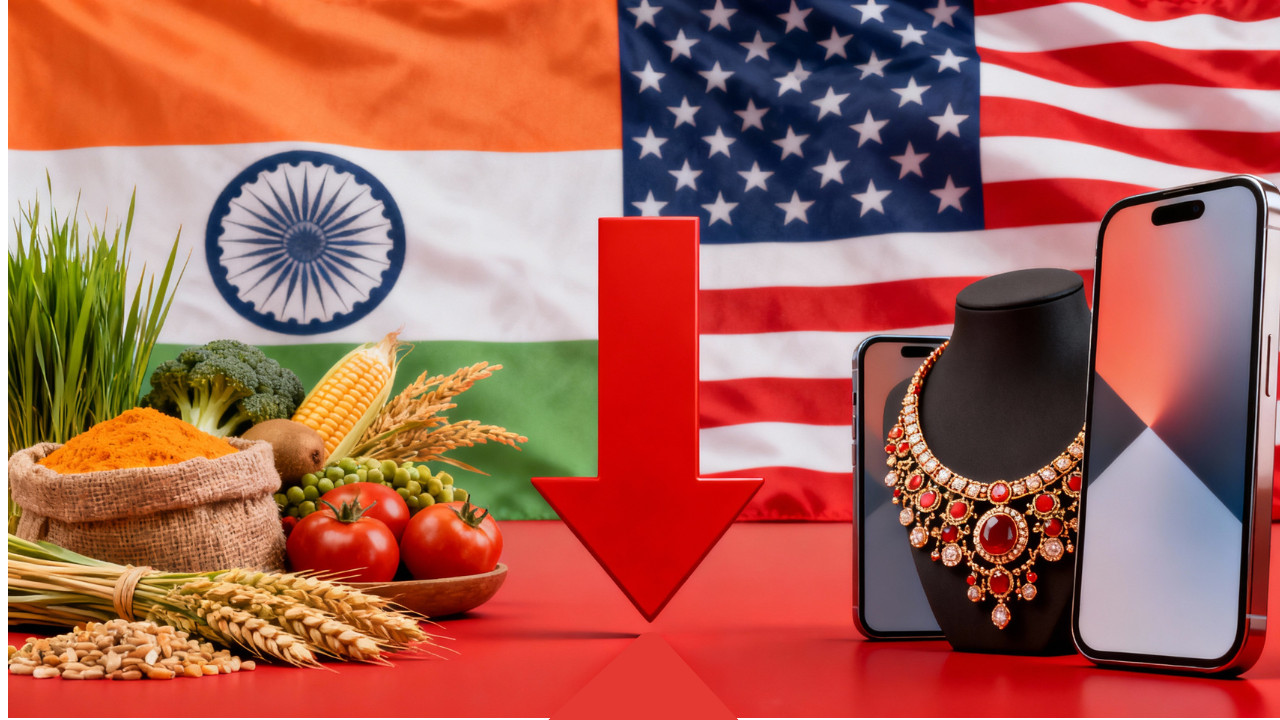
US import tariffs on Indian goods, doubling to 50%, have caused a sharp 28.5% drop in exports over five months. Labour-intensive sectors, including textiles and gems, faced the steepest declines, leading to significant revenue losses and job concerns. India’s government is urged to expedite export promotion missions and negotiate tariff reductions with the US.
Navigating the Shifting Sands: How US Tariffs are Reshaping India’s Export Landscape
The global trade winds, never entirely predictable, have been particularly turbulent lately. While navigating this complex environment, India is feeling the effects of tariffs imposed by the United States, and the numbers are starting to tell a story. Recent data reveals a concerning dip – a 28.5% drop in India’s exports to the US over a five-month period. This isn’t just a statistical blip; it represents a significant shift affecting several key sectors of the Indian economy.
But what’s driving this downturn, and what does it mean for Indian businesses going forward? Let’s delve into the details.
The Weight of Tariffs: A Closer Look at the Impact
The tariffs implemented during the previous US administration are casting a long shadow. While the current administration has made efforts to reassess certain trade relationships, many of these measures remain in place. This has placed Indian exporters in a decidedly less competitive position within the American market.
The consequences ripple across various industries. Engineering goods, a mainstay of Indian exports, have experienced a noticeable decline. The same goes for chemicals, a sector where India has been steadily building its global presence. Even traditionally strong sectors like textiles and gems & jewelry are feeling the pinch, highlighting the broad reach of these trade barriers. The interconnectedness of the global economy means that tariffs, even when targeted at specific goods, can have widespread and often unforeseen effects.


Beyond the Numbers: Real-World Implications for Indian Businesses
It’s easy to get lost in the sheer volume of statistics, but it’s crucial to remember that behind each percentage point lies a real business, a real job, and a real family. For many Indian exporters, the US market represents a crucial source of revenue and growth. These tariffs create uncertainty and force businesses to make difficult choices.
Some companies are absorbing the extra costs, hoping for a future shift in policy. Others are forced to raise prices, potentially losing market share to competitors from countries with more favorable trade agreements. And, sadly, some are having to scale back operations or even close their doors. The human cost of these trade disputes shouldn’t be underestimated. This situation also emphasizes the need for diversification in export markets, something we explored in our article about [India’s emerging trade partnerships](internal-link-to-related-article).
Navigating the Future: Strategies for Indian Exporters
The key question is: what can be done? The situation is complex, but several strategies are emerging.
Firstly, Indian businesses are actively seeking to diversify their export markets. Rather than relying solely on the US, many are exploring opportunities in regions like the EU, Southeast Asia, and Africa. These regions offer significant potential for growth and can help to buffer against fluctuations in any single market.

Secondly, there’s a growing emphasis on enhancing competitiveness. This includes investing in technology, improving efficiency, and focusing on innovation. By producing higher-quality goods at competitive prices, Indian exporters can better withstand the challenges posed by tariffs. The Indian government is also playing a crucial role by providing support through export promotion schemes and initiatives aimed at improving infrastructure.
Finally, active dialogue and negotiation with the US government remain essential. While tariffs create challenges, they also highlight the importance of open communication and a commitment to finding mutually beneficial solutions.
Charting a Course Through Uncertain Waters
The drop in Indian exports to the US is a stark reminder of the interconnectedness and volatility of the global economy. While the current situation presents significant challenges, it also offers opportunities. By embracing diversification, investing in competitiveness, and actively engaging in dialogue, Indian businesses can navigate these turbulent times and build a more resilient export future. The road ahead might be bumpy, but with a proactive and strategic approach, India can continue to thrive in the global marketplace.