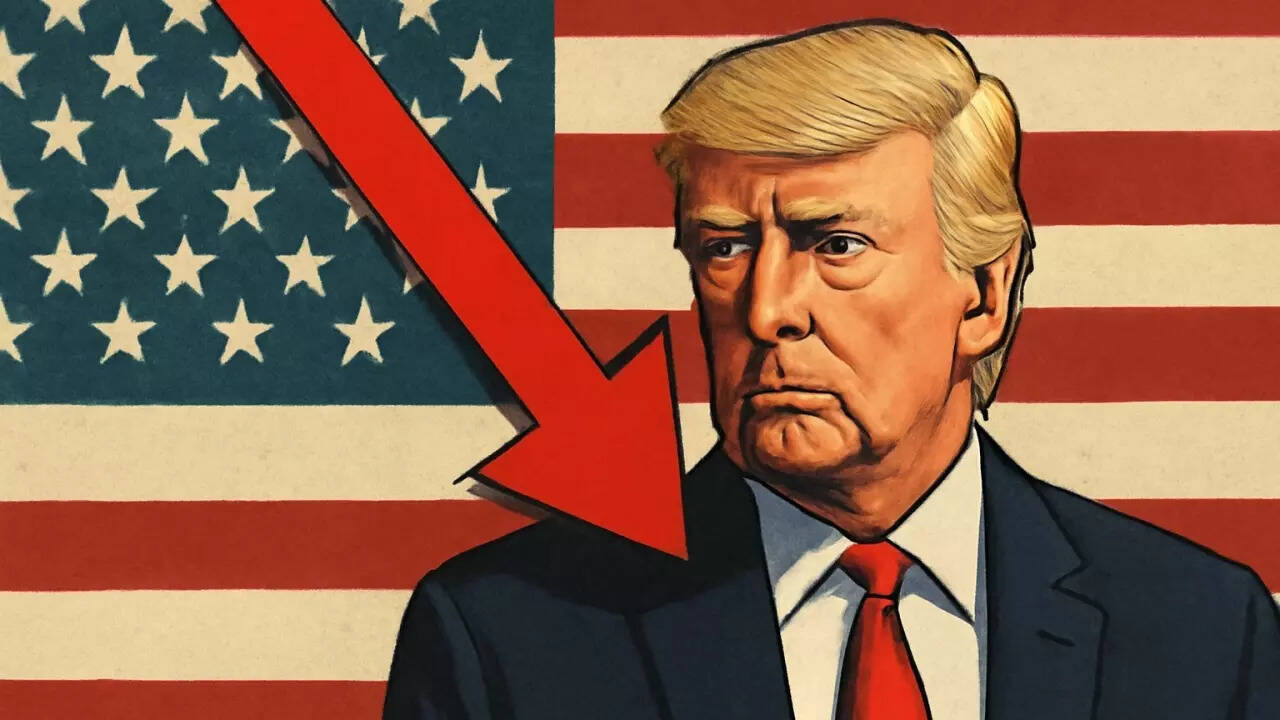
Fitch Ratings reports a US economic slowdown, projecting a deceleration from 2.8% in 2024 to 1.6% in 2025 and 2026. Consumer spending and government expenditure are weakening, while the labor market shows signs of softening with reduced job creation. Despite tariff impacts on inflation, the Fed is expected to ease policy with rate cuts.
Is the American Economic Engine Sputtering? A Look at the Warning Signs
The American economic landscape, once a picture of robust growth, might be showing some cracks. While headlines often tout record stock market highs, a deeper dive into the economic data paints a more nuanced, and perhaps concerning, picture. Whispers of a potential slowdown are getting louder, and even major financial institutions are starting to take notice. Are we heading for an economic speed bump, or something more significant?
Tariffs and Turbulence: The Price of Protectionism
The previous administration’s imposition of tariffs, primarily aimed at China, created a ripple effect throughout the global economy. The intention was to protect American industries and jobs, but the reality proved more complex. These tariffs, essentially taxes on imported goods, increased costs for businesses and consumers alike. The immediate impact? Higher prices on everything from electronics to everyday household goods.
This protectionist approach didn’t just affect trade with China. It sparked retaliatory tariffs from other countries, further disrupting global supply chains and creating uncertainty for businesses operating internationally. The result was a drag on overall economic activity, as companies grappled with increased costs and fluctuating market conditions. While the current administration has taken steps to de-escalate some of these trade tensions, the lingering effects of the tariff wars are still being felt.
Decoding the Data: Evidence of a Slowdown

The economic data itself is starting to raise eyebrows. Key indicators, such as manufacturing output and consumer spending, are showing signs of deceleration. Manufacturing, often considered a bellwether for the broader economy, has seen a noticeable slowdown in recent months. This could signal decreased demand, both domestically and internationally, reflecting a broader cooling of economic activity.
Consumer spending, which accounts for a significant portion of the U.S. economy, is also showing signs of weakness. While still positive, the rate of growth has slowed, indicating that Americans are becoming more cautious with their spending habits. This could be attributed to a number of factors, including inflation, rising interest rates, and general economic uncertainty. The combination of these factors suggests a potential weakening of the foundations upon which the recent economic expansion was built.
The Role of Interest Rates in Navigating Economic Waters
The Federal Reserve, tasked with maintaining price stability and full employment, has been closely monitoring these developments. Their primary tool for influencing the economy is the manipulation of interest rates. To combat rising inflation, the Fed has been aggressively raising interest rates. This makes borrowing more expensive for businesses and consumers, which, in turn, is intended to cool down the economy and bring inflation under control.
However, raising interest rates can be a double-edged sword. While it can help curb inflation, it can also slow down economic growth and potentially trigger a recession. Finding the right balance – the “sweet spot” – is a delicate act that requires careful analysis of a multitude of economic indicators. The potential for overcorrection is a real concern, and the Fed is under pressure to navigate these challenging waters effectively.
The Future Outlook: Navigating Uncertainty and Considering Alternatives


Predicting the future with certainty is impossible, but the warning signs are there. The combination of lingering tariff effects, slowing economic data, and rising interest rates suggests that the American economy is facing headwinds. Whether these headwinds will lead to a mild slowdown or a more significant contraction remains to be seen.
Policymakers need to consider alternative approaches to bolster economic growth, such as investing in infrastructure, promoting innovation, and supporting education and job training programs. These measures can help create a more resilient and sustainable economy, capable of withstanding future shocks. It’s crucial to foster a business environment that encourages investment, innovation, and long-term planning. For related insights, check out our analysis of the latest global trade trends.
The current economic climate demands vigilance and proactive measures. By carefully monitoring the data, understanding the potential risks, and implementing appropriate policies, we can navigate these challenges and build a stronger, more sustainable economic future. The path forward requires a collaborative approach, bringing together policymakers, businesses, and individuals to work towards a shared vision of economic prosperity.