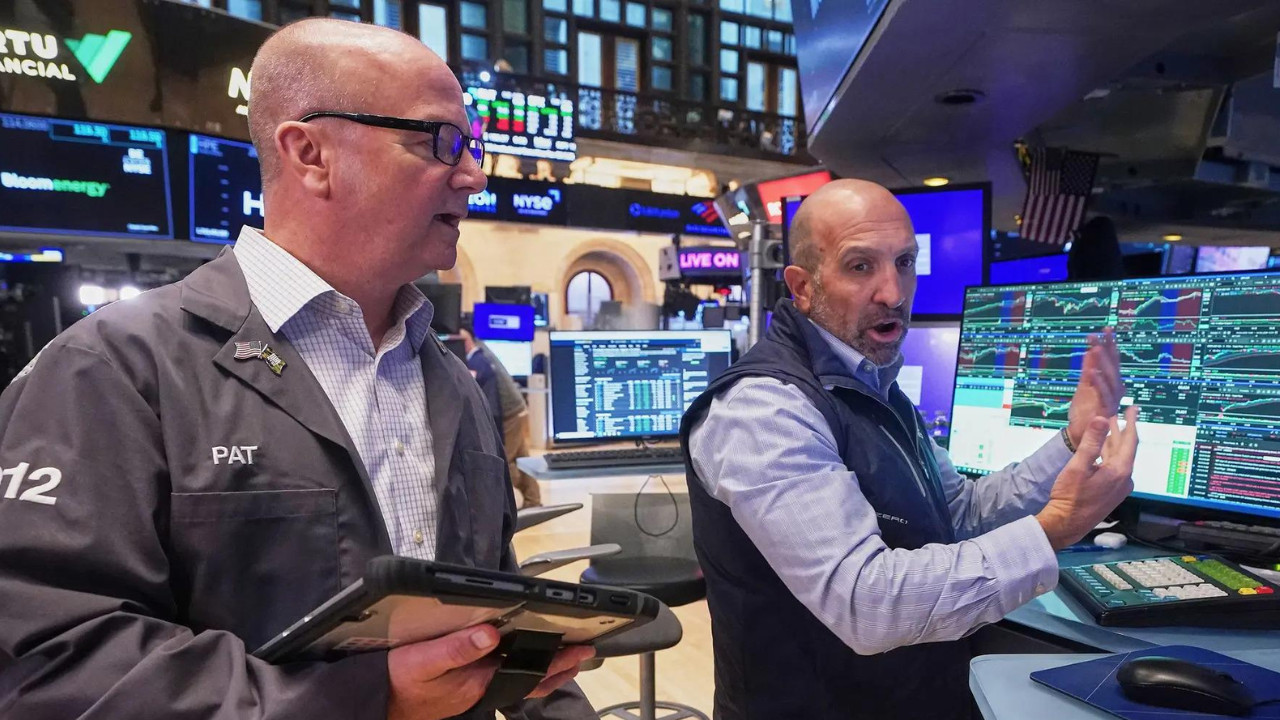
Indian markets are bracing for a weaker opening as global tech stocks falter amid persistent inflation worries, dampening hopes for early Federal Reserve rate cuts. AI-driven gains are showing signs of overvaluation, with major indices across Asia and Europe also experiencing declines. Concerns over generative AI’s copyright implications and executive compensation plans are also impacting specific companies.
Wall Street Wobbles: Is the Tech Train Slowing Down?
Wall Street took a tumble recently, leaving investors wondering if the relentless tech rally is finally running out of steam. The major indexes all closed lower, with the tech-heavy Nasdaq Composite taking the biggest hit. But what’s behind this market mood swing, and should you be hitting the panic button?
The short answer? Probably not. While no one likes to see their portfolio shrink, a little perspective is crucial. This downturn seems to be fueled by a cocktail of factors, the most potent being fading hopes for imminent interest rate cuts by the Federal Reserve.
Remember all the buzz about the Fed pivoting and starting to ease monetary policy? That optimism has been a key driver of market gains this year, particularly for growth stocks like those in the technology sector. The logic is simple: lower interest rates make it cheaper for companies to borrow money, fueling investment and expansion. They also make future earnings more attractive, boosting stock valuations.
However, recent economic data, particularly stubbornly persistent inflation, has thrown cold water on those rate cut dreams. Stronger-than-expected jobs numbers and inflation reports suggest the Fed may hold rates steady for longer than initially anticipated, or even potentially raise them further. This realization sent ripples through the market, causing investors to reassess their positions, particularly in richly valued tech stocks.

Big Tech Feels the Pinch
The big names in tech felt the pinch most acutely. Nvidia, Tesla, and Amazon, all market darlings who have propelled much of this year’s gains, led the sell-off. Nvidia, the semiconductor giant riding the wave of artificial intelligence enthusiasm, saw a significant dip. Tesla, constantly facing scrutiny and market variability, also faced headwinds. Even Amazon, the e-commerce behemoth, couldn’t escape the negative sentiment.
Why these companies specifically? For one, they’ve had an incredible run. Some analysts believe valuations had simply become stretched, making them vulnerable to profit-taking when the overall market mood soured. Secondly, their growth prospects, while still strong, are being viewed with a more discerning eye in light of the changing interest rate environment. Investors are now demanding more tangible, near-term results, rather than relying solely on long-term potential.
<img src="image.jpg" alt="Worried investor watching the stock market on a laptop screen. The image represents a dip in US stock prices, with a focus on fading hopes for rate cuts.” width=”600″ height=”400″>
Beyond Rate Hopes: Other Market Movers
Of course, interest rate expectations aren’t the only factor influencing the market. Geopolitical uncertainty, persistent supply chain issues, and concerns about a potential economic slowdown are all weighing on investor sentiment.
The bond market is also signaling caution. The yield on the 10-year Treasury note, a benchmark for borrowing costs, has been rising, reflecting concerns about inflation and the Fed’s future policy moves. A higher yield makes bonds more attractive relative to stocks, potentially diverting investment away from the equity market.
Navigating the Uncertainty: Staying the Course
So, what should you do amidst this market uncertainty? First and foremost, avoid making rash decisions based on short-term market fluctuations. A well-diversified portfolio and a long-term investment horizon are your best defenses against volatility.

Consider revisiting your asset allocation to ensure it aligns with your risk tolerance and financial goals. Now might also be a good time to re-evaluate the performance of your holdings and trim any positions that have become overvalued or no longer fit your investment strategy. Remember, volatility can also present opportunities. A market dip can be a chance to buy into quality companies at more attractive prices.
Also, make sure you’re up to speed on the latest financial planning tips.
The Road Ahead: More Bumps or Smooth Sailing?
Predicting the future of the stock market is a fool’s errand. There’s no guarantee we’ll see continued declines. We might very well experience a rebound. However, it’s fair to say that the market is likely to remain volatile in the near term as investors grapple with uncertainty about the Fed’s next move and the overall economic outlook. The era of easy money, fueled by ultra-low interest rates, seems to be over, at least for now. This means investors need to be more selective and focus on companies with solid fundamentals, strong earnings growth, and sustainable business models. The market correction can be scary, but focusing on long-term resilience can lead to favorable results.