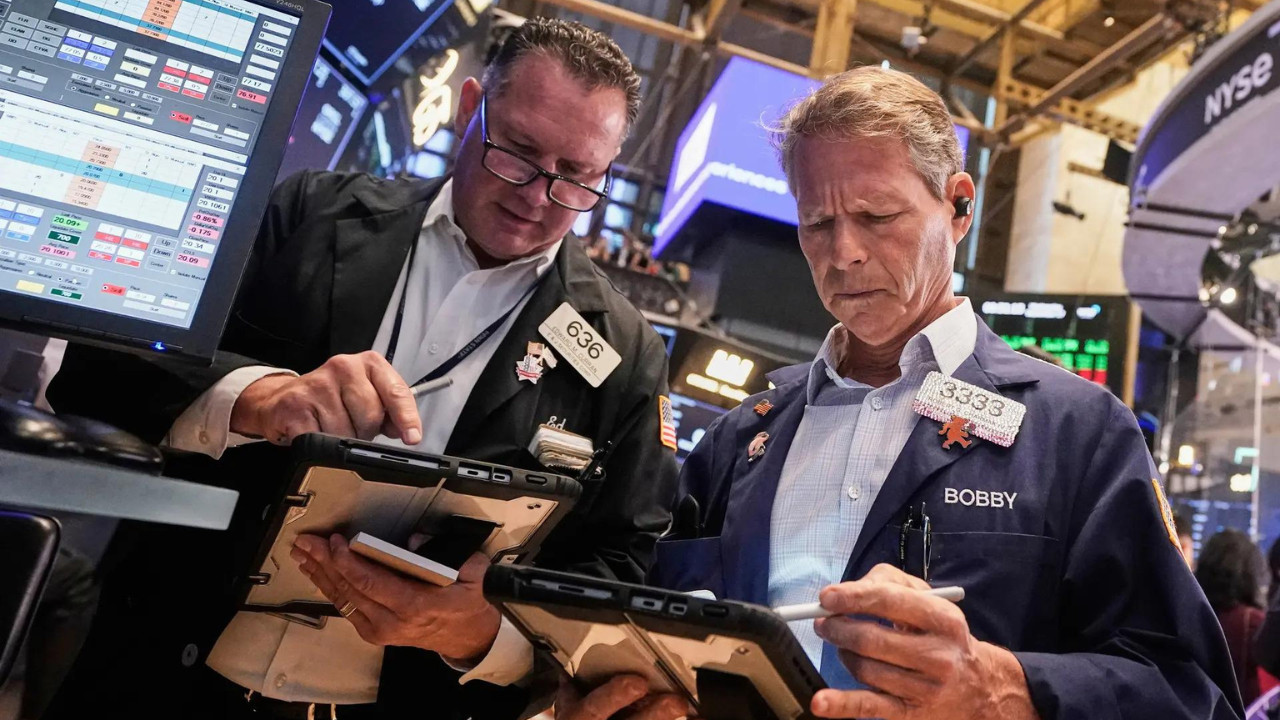
US stocks drifted on Wednesday. Job market signs caused investor caution. The S&P 500, Dow Jones, and Nasdaq saw declines. An ADP report showed job cuts in September. This report also revised August employment down. Treasury yields fell. A government shutdown may delay official job data. This created market uncertainty. Individual stocks performed differently. Cal-Maine Foods fell. Nike rose.
The Economy’s Holding Pattern: Decoding Wall Street’s Latest Wiggles
Wall Street just experienced a day that felt less like a sprint and more like a… gentle sway. Major indexes meandered, nudged this way and that by a mix of economic data and investor sentiment that felt, well, uncertain. The Dow Jones Industrial Average, S&P 500, and Nasdaq Composite all displayed minimal movement, leaving many to wonder: What’s really going on?
The day’s narrative seemed to be largely shaped by a weaker-than-anticipated ADP National Employment report. This report, often seen as a prelude to the government’s more comprehensive jobs report, indicated a slower pace of hiring than economists had predicted. Think of it as a canary in the coal mine, potentially signaling a cooling labor market. The immediate impact was a slight dip in stock prices, reflecting concerns about future economic growth.
Treasury yields responded in kind, with a noticeable drop across the board. This makes sense; weaker economic data typically prompts investors to seek the relative safety of government bonds, driving up demand and pushing yields down. In simple terms, when the economic outlook appears less rosy, investors flock to assets perceived as less risky.
But here’s where it gets interesting. While the ADP report certainly grabbed headlines, it didn’t trigger a full-blown sell-off. Why? Perhaps because the market is already braced for a potential slowdown, and a single data point, while significant, isn’t enough to completely derail the prevailing narrative. Perhaps investors are weighing the potential downsides against the possibility that the Federal Reserve might ease up on its aggressive interest rate hikes if the economy genuinely begins to cool.
This brings us to the central question hanging over Wall Street: What will the Fed do next? The Fed’s actions have been the dominant force shaping market behavior for the past year, and any hint of a shift in their approach is closely scrutinized. A weaker jobs market could give the Fed reason to pause or even reverse course on rate hikes, which would likely be welcomed by investors concerned about the impact of higher rates on corporate earnings and economic growth.


The Broader Economic Picture
Beyond the daily market fluctuations, it’s crucial to keep the bigger picture in mind. The U.S. economy has shown remarkable resilience in the face of rising interest rates and persistent inflation. Consumer spending has remained surprisingly strong, and the labor market, despite recent signals of cooling, is still relatively tight.
However, there are also signs of strain. Inflation, while moderating, remains above the Fed’s target level. The housing market has cooled considerably, and certain sectors, such as manufacturing, are showing signs of weakness. It’s a mixed bag, making it difficult to predict the economy’s trajectory with any degree of certainty.
What This Means for Investors
So, what should investors make of all this? The current environment calls for a cautious and diversified approach. It’s essential to avoid making rash decisions based on short-term market swings. Instead, focus on your long-term investment goals and maintain a well-balanced portfolio that can weather potential economic storms. Consider rebalancing your portfolio to ensure that your asset allocation aligns with your risk tolerance and investment objectives.

Think about sectors that traditionally perform well during periods of economic uncertainty, such as consumer staples or healthcare. Companies with strong balance sheets and consistent earnings are also likely to be more resilient in a challenging economic environment.
Remember that market volatility is a normal part of investing. While it can be unsettling, it also presents opportunities for long-term investors. By staying disciplined and focusing on your long-term goals, you can navigate the current economic landscape and position yourself for future success. You might also explore other avenues for wealth creation, like understanding the nuances of [real estate investment trusts (REITs)](/blog/understanding-reits), to further diversify your portfolio.
Navigating the Uncertainty on Wall Street
Ultimately, the market’s recent pause reflects a period of uncertainty and adjustment. The economy is sending mixed signals, and investors are trying to decipher what it all means for the future. While no one can predict the future with certainty, by staying informed, remaining disciplined, and focusing on your long-term goals, you can navigate the challenges and opportunities that lie ahead. The key is to acknowledge the inherent uncertainty and build a portfolio that can withstand a variety of economic scenarios.