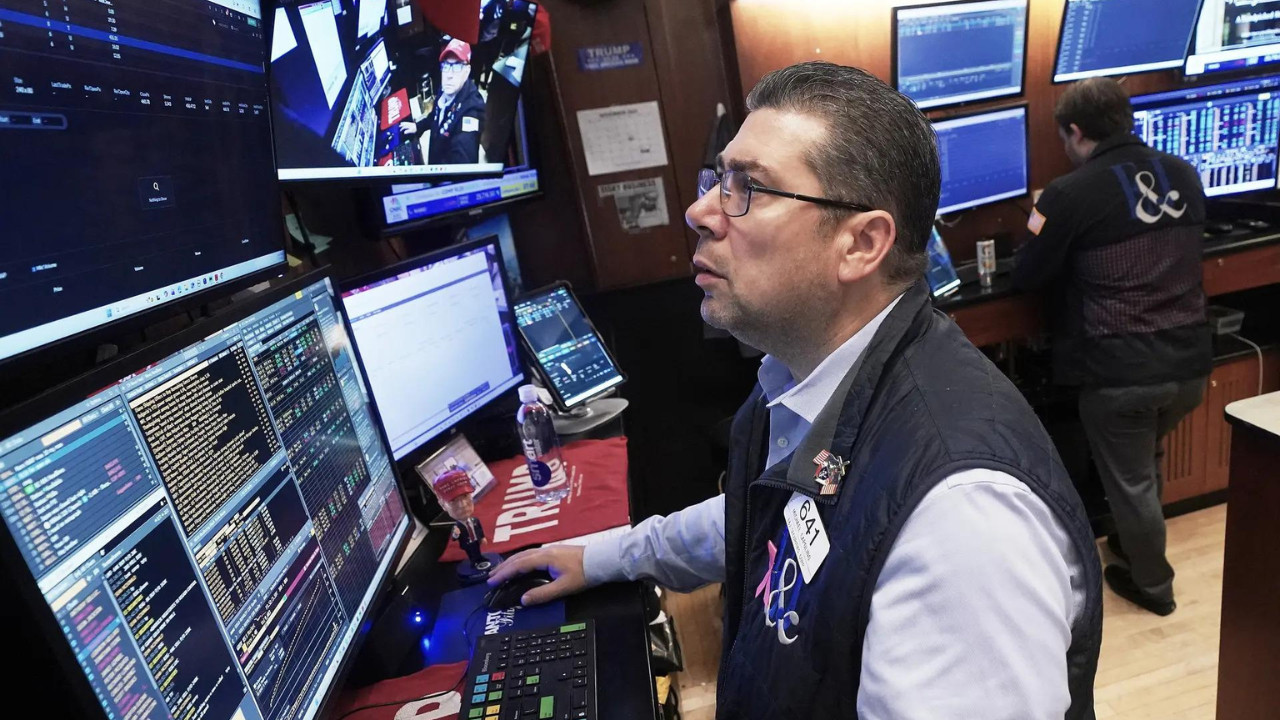
US stocks saw a mixed performance Tuesday, with the S&P 500 and Dow Jones edging higher while the Nasdaq dipped. Softer retail sales and producer price data fueled hopes for a December Fed rate cut. Strong retail earnings from Abercrombie & Fitch and Kohl’s boosted consumer stocks, though chipmakers faced pressure.
Wall Street’s Cautious Dance: Navigating Rate Cut Whispers and Nvidia’s Stumble
Wall Street concluded a recent trading session with a cautiously optimistic tone, as the siren song of potential interest rate cuts warbled through the financial markets. The Dow Jones Industrial Average, S&P 500, and Nasdaq Composite all posted modest gains, yet a distinct sense of restraint permeated the atmosphere. It wasn’t a jubilant leap forward, but rather a measured step, colored by the contrasting hues of hope and uncertainty.
The driving force behind this tentative optimism? The ever-present anticipation of the Federal Reserve finally pivoting towards a more accommodative monetary policy. Whispers of potential rate cuts have been swirling for months, fueling rallies and tempering downturns alike. Investors, it seems, are perpetually poised on the edge of their seats, awaiting the signal that could unleash the next wave of market growth. The expectation is that lowering rates would ease borrowing costs for companies, boosting investment and ultimately invigorating the economy.
However, the path isn’t crystal clear. Economic data continues to paint a mixed picture, with some indicators suggesting a cooling economy ripe for rate cuts, while others point to persistent inflation that could give the Fed pause. This tug-of-war between conflicting signals is contributing to the market’s cautious demeanor.
<img src="image-of-wall-street-financial-district.jpg" alt="View of the Wall Street Financial District in New York, indicative of current stock market sentiment.” width=”600″ height=”400″>

Adding another layer of complexity to the mix was the recent performance of Nvidia. While the broader market edged upwards, the tech giant experienced a noticeable slump. This downward pressure on one of the market’s darlings served as a stark reminder that even the most seemingly invincible companies are not immune to volatility. Nvidia’s performance carries significant weight, especially for the Nasdaq, as the company’s chips are crucial for AI development, and its stock price is heavily watched. Any dip in Nvidia’s fortunes can ripple through the entire tech sector, impacting overall market sentiment.
This brings us to a critical question: How should investors approach this environment? The answer, predictably, isn’t simple. The market is currently walking a tightrope, balancing the allure of potential rate cuts with the reality of economic uncertainty and sector-specific vulnerabilities.
One potential strategy is to focus on sectors that are likely to benefit most from lower interest rates, such as real estate and utilities. These sectors tend to be more sensitive to borrowing costs, meaning that rate cuts could provide a significant boost to their performance. However, it’s also crucial to conduct thorough due diligence and avoid simply chasing the latest trends. Solid fundamentals and long-term growth potential should remain the guiding principles of any investment decision.
Another approach involves diversifying your portfolio across different asset classes. Spreading investments across stocks, bonds, and other assets can help mitigate risk and cushion the impact of any market downturn. This strategy is particularly important in an environment where volatility is likely to remain elevated.
Furthermore, it’s essential to stay informed and keep a close eye on economic data and corporate earnings. Understanding the underlying forces shaping the market is crucial for making sound investment decisions. This isn’t about day-trading or trying to predict short-term market fluctuations, but rather about developing a long-term perspective based on solid information. See related article on [long-term investing strategies](/long-term-investing).

Ultimately, navigating the current market environment requires a blend of optimism, caution, and a healthy dose of realism. The potential for rate cuts offers a glimmer of hope, but it’s crucial to remain aware of the risks and uncertainties that lie ahead. By staying informed, diversifying your portfolio, and focusing on long-term fundamentals, you can position yourself to weather any potential storms and capitalize on future opportunities.
The market’s cautious dance reflects a deeper truth: investing is rarely a straightforward endeavor. It’s a continuous process of adaptation, learning, and adjusting your strategies based on the ever-evolving landscape. By embracing this dynamic approach, investors can navigate the complexities of Wall Street and pursue their financial goals with confidence.