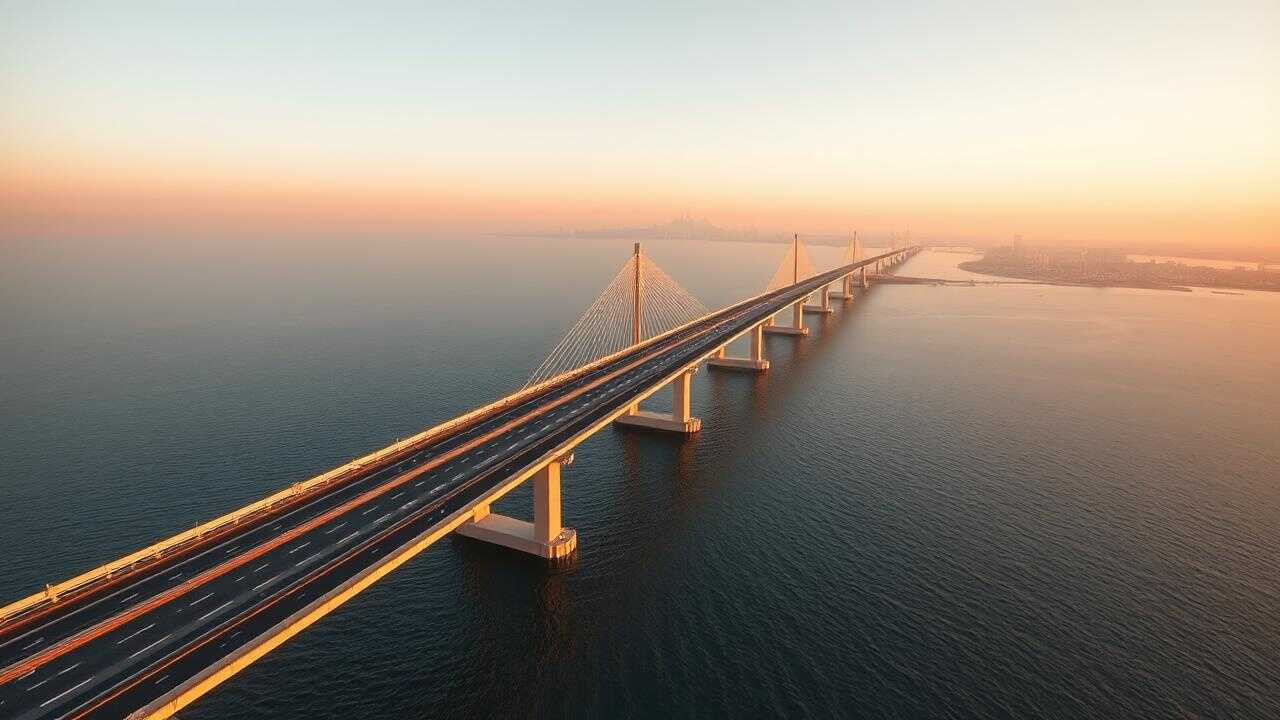
Mumbai is set for a massive transport upgrade with the approval of the Uttan–Virar Sea Link, Phase I. This 24.35-km bridge, India’s longest, will anchor a 120-km coastal corridor connecting South Mumbai to Vasai, Virar, and Vadhavan Port. The Rs 58,754 crore project promises reduced travel times, lower emissions, and significant economic development.
Mumbai’s Coastal Commute Gets a Game-Changing Boost: The Uttan-Virar Sea Link is Finally a Go!
Imagine slicing through the congested roads north of Mumbai, trading bumper-to-bumper frustration for a smooth, scenic cruise along the coast. That vision is about to become a reality. After years of planning and anticipation, the first phase of the Uttan-Virar Sea Link has been given the green light, promising to revolutionize connectivity and ease traffic woes in the bustling Mumbai Metropolitan Region (MMR).
This isn’t just another infrastructure project; it’s a potential paradigm shift in how people travel in and around Mumbai. The approved Phase I will see the construction of a 5.6 km elevated corridor connecting Uttan to Bhayandar, setting the stage for the larger 55 km sea link that will eventually stretch all the way to Virar.
Why This Sea Link Matters
For years, the northern stretches of Mumbai have struggled with crippling traffic congestion. Existing road networks are simply unable to cope with the ever-increasing volume of vehicles, leading to frustrating delays and economic inefficiencies. The Uttan-Virar Sea Link aims to address this head-on by providing a direct, high-speed alternative for commuters and cargo alike.
Think about the possibilities: reduced travel times for daily commuters, faster movement of goods between key industrial areas, and even a potential boost to tourism as the coastal region becomes more accessible.


Decoding Phase I: What to Expect
The initial phase focuses on the critical connection between Uttan and Bhayandar. This section will be an elevated corridor, designed to minimize disruption to existing infrastructure and the environment. The project includes strategically placed interchanges, allowing for seamless integration with the existing road network.
But the benefits extend beyond just shorter travel times. Planners are also focusing on incorporating sustainable design principles into the construction process, including measures to protect marine life and minimize the environmental impact. This commitment to sustainability is crucial, ensuring that the sea link provides long-term benefits without compromising the region’s natural beauty.
The Bigger Picture: A 55 km Coastal Transformation
While Phase I is a significant step, it’s only the beginning of a much larger transformation. The complete Uttan-Virar Sea Link will span an impressive 55 kilometers, creating a continuous coastal expressway that will dramatically improve connectivity across the northern MMR. This ambitious project will undoubtedly have a ripple effect, stimulating economic growth, attracting investment, and improving the overall quality of life for millions of residents. We’ve covered similar infrastructure projects and their impacts in our previous article about the Mumbai Trans Harbour Sea Link project, a similar game-changer for the city.
Overcoming Challenges and Looking Ahead
Of course, a project of this magnitude comes with its fair share of challenges. Land acquisition, environmental clearances, and logistical complexities all need to be carefully managed to ensure the project stays on track. Close coordination between government agencies, construction firms, and local communities will be essential for smooth and timely completion.

The approval of Phase I is a testament to the unwavering commitment of stakeholders to transform Mumbai’s infrastructure landscape. As construction progresses, we can expect to see a significant shift in travel patterns and a noticeable improvement in traffic flow in the northern MMR. The Uttan-Virar Sea Link isn’t just about building a road; it’s about building a better future for Mumbai and its surrounding regions.
A Brighter, More Connected Future
The Uttan-Virar Sea Link promises to be more than just a transportation solution; it’s an investment in the future of Mumbai. By easing congestion, improving connectivity, and stimulating economic growth, this ambitious project has the potential to reshape the region for generations to come. As Phase I gets underway, the anticipation for a smoother, more connected Mumbai is palpable. The future of coastal commuting in Mumbai is looking brighter than ever.