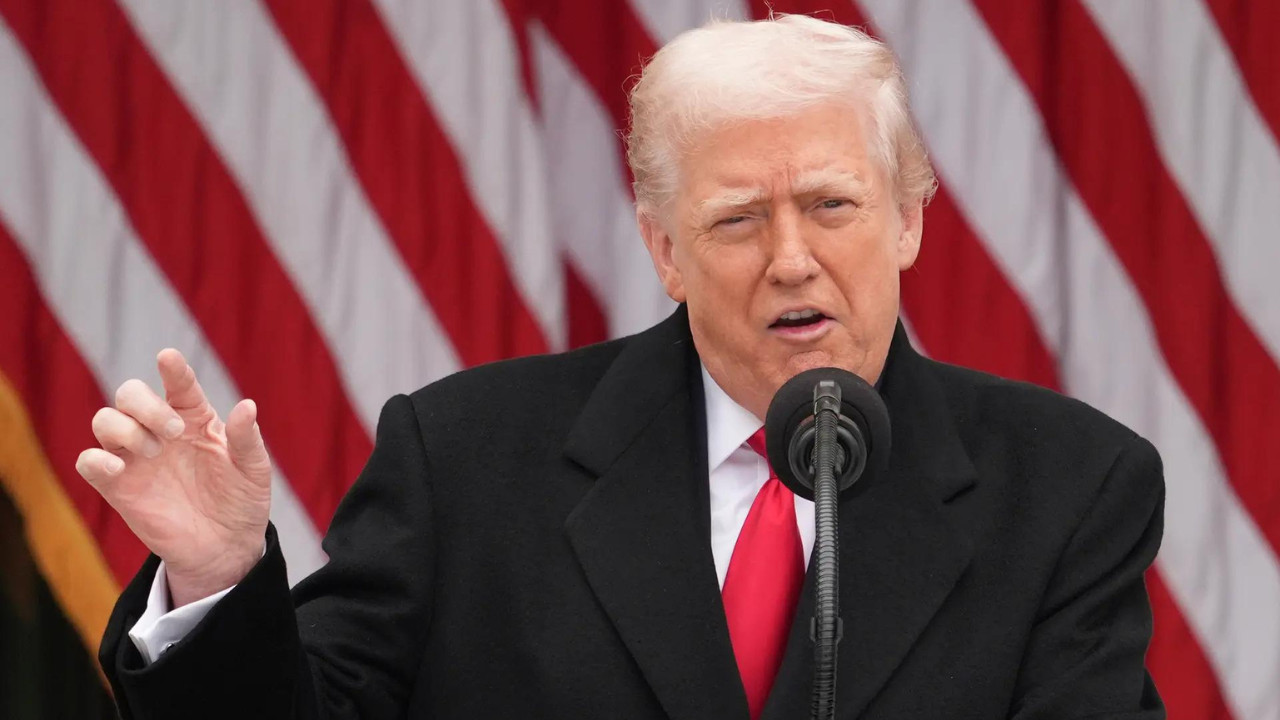
Donald Trump asserted his tariff regime has made the U.S. “Rich, Strong, Powerful, and Safe,” claiming it has stopped wars, strengthened alliances, and boosted the stock market. He attributed these outcomes to “Strong Leadership and TARIFFS,” as tariff revenues have significantly increased, with a Supreme Court ruling on presidential authority pending.
The Tariff Tightrope: Did Trump’s Trade Strategy Really Deliver?
Donald Trump, never one to shy away from bold pronouncements, has consistently championed tariffs as a cornerstone of American economic strength. Remember those days? He wasn’t just tweaking the dials; he was declaring a full-blown trade revolution, promising that these levies would make America richer and safer. But did the reality live up to the rhetoric? Let’s take a closer look at Trump’s tariff policies and the complex legacy they left behind.
One of Trump’s core arguments was that tariffs would bring jobs back to the U.S., reinvigorate domestic manufacturing, and ultimately reduce the trade deficit. His administration slapped tariffs on a wide range of goods, most notably from China, but also from allies like the European Union and Canada. Steel and aluminum imports were hit hard, impacting industries across the board.
The immediate effects were, shall we say, noticeable. American consumers felt the pinch as the cost of imported goods increased. Businesses reliant on these materials faced higher input costs, squeezing profit margins and forcing some to raise prices. The promised flood of new manufacturing jobs? A more nuanced picture emerged. While some sectors saw a modest uptick, others experienced declines due to retaliatory tariffs imposed by other countries. Farmers, particularly, were caught in the crossfire, facing dwindling export markets for soybeans and other agricultural products.

The idea behind using tariffs was simple: make foreign goods more expensive, incentivizing consumers to buy American-made products. It’s a strategy rooted in protectionism, the belief that shielding domestic industries from foreign competition is the best way to foster economic growth. However, the global economy is far more interconnected than it was in the days of Smoot-Hawley. Supply chains stretch across borders, and businesses rely on international trade to source components, raw materials, and finished products.
So, what happened? Did this grand plan to reshape global trade work?
The data paints a mixed picture. The U.S. trade deficit, a key target of Trump’s policies, did not magically vanish. In fact, in some periods it actually increased, suggesting that tariffs alone were not enough to rebalance the scales. While some industries benefited from reduced foreign competition, others suffered from higher costs and decreased export opportunities.
Furthermore, the imposition of tariffs sparked trade disputes with key partners. Retaliatory measures from China, the EU, and others created uncertainty and instability in the global economy. Businesses struggled to navigate the shifting landscape, delaying investment decisions and disrupting carefully planned supply chains.
One could argue that these tariffs served as a negotiating tactic, forcing other countries to the table to renegotiate trade agreements. Indeed, the USMCA (United States-Mexico-Canada Agreement) replaced NAFTA, and Trump hailed it as a major victory for American workers and businesses. However, the economic impact of the USMCA is still being debated, and it’s unclear whether it fully compensated for the disruption caused by the trade wars. We discussed some of the USMCA benefits in a previous article, found [here](internal-link-to-usmca-article).

Ultimately, Trump’s tariff policies were a high-stakes gamble. They certainly shook up the global trading system and forced a re-evaluation of existing trade relationships. Whether they truly made America richer and safer, as claimed, is a question that economists and historians will be debating for years to come. What is clear is that the world of international trade is complex, and simple solutions rarely deliver the promised results. The implications of tariffs are a complex equation with many variables, and their effects are felt far beyond the borders of any single nation.
The legacy of Trump’s trade strategy is a reminder that trade policy is not just about economics; it’s about geopolitics, national security, and the well-being of ordinary people. Understanding the true consequences of these policies will require a careful and unbiased assessment of the data, as well as a willingness to learn from the past. How we navigate this complex trade landscape will shape our economic future for decades to come.